Navigating the New Era of Customer Understanding
In today’s digital economy, understanding the customer is no longer a competitive advantage. It is absolutely necessary for survival. Businesses are saturated with customer data from websites, mobile apps, social media, and in-store interactions. Yet, despite this wealth of information, many struggle to form a coherent picture of who their customers are. The data exists in disconnected silos, making it impossible to understand the complete customer journey. This fragmentation leads to disjointed marketing, impersonal customer experiences, and missed opportunities. With the current upsurge in the use of artificial intelligence and technology, there are options which reduce this fragmentation and make the data easier to utilize. The technology designed to solve this critical problem is the Customer Data Platform (CDP).
The Promise of Unified Customer Data
A Customer Data Platform promises to be the central nervous system for all customer data, breaking down silos and creating a single, persistent, and unified view of each individual. The global CDP market, valued at USD 5.37 billion in 2023, is projected to grow at a staggering rate, underscoring its rising importance as a core business system, according to Grand View Research. By connecting every touchpoint, a CDP helps organizations go beyond generic campaigns. It allows them to deliver highly personalized experiences. These experiences build lasting customer relationships.
What This Guide Will Cover
This essential guide will demystify the world of Customer Data Platforms. We will define what a CDP is, explore its core functionalities, and explain why it has become a strategic imperative for modern businesses. We will break down how a CDP works, compare it to other data technologies, and detail the transformative benefits it offers not just to marketing, but to the entire organization. We will also tell you how to choose a CDP that meets your business needs.
What Exactly Is a Customer Data Platform (CDP)? The Foundation of Customer-Centricity
At its core, a Customer Data Platform is the foundational technology for any organization aiming to place its customers at the center of every decision. It’s the engine that powers true, data-driven customer understanding and engagement.
Defining a Customer Data Platform
A Customer Data Platform is packaged software that creates a persistent, unified customer database that is accessible to other systems. A CDP is designed and managed by business users, mainly marketers, not by IT. It collects customer data from many sources. After data collection, it combines the data to build complete customer profiles. Finally, it makes the data available for personalization and use across different channels. The primary goal is to create a single, reliable source of truth for all customer information.
Core Functionality: Collect, Unify, Resolve, Segment, Activate
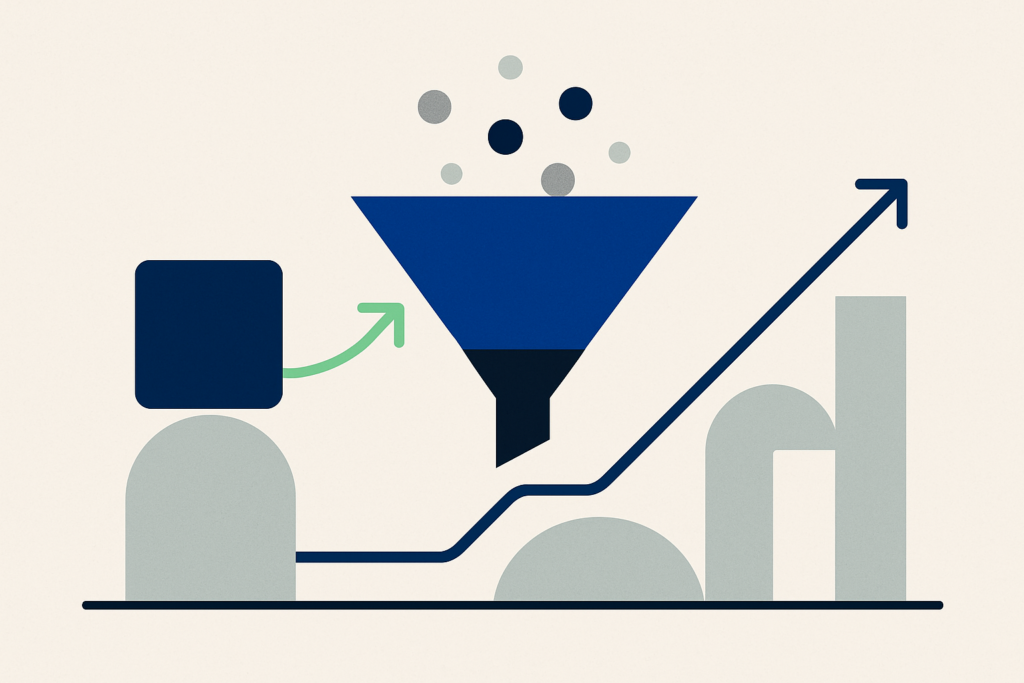
The five core functionalities of a CDP work together in a continuous cycle to collect, unify, resolve, segment, and activate customer data.
The power of a CDP lies in its five core functionalities, which work in a continuous cycle:
- Collect: It ingests first-party data—behavioral, transactional, and demographic—from every customer touchpoint in real time. This includes websites, mobile apps, CRM systems, email platforms, and even offline sources.
- Unify & Resolve: It cleans, standardizes, and stitches together data from disparate sources into a single, cohesive profile for each individual customer through a process called identity resolution.
- Segment: It allows marketers to create precise audience segments based on any combination of attributes and behaviors stored in the unified customer profiles. A recent Treasure Data survey found that 93% of marketers see significant value in using CDPs to unify this fragmented data.
- Activate: It pushes these segments and profile data to other tools in the marketing technology stack—such as email service providers, ad platforms, and customer service tools—to power personalized marketing campaigns and customer interactions.
The Central Role of the Unified Customer Profile (Single Customer View / Customer 360)
The ultimate output and most valuable asset of a CDP is the unified customer profile, often called the “Single Customer View” or “Customer 360.” This profile is a comprehensive, chronologically ordered record of every interaction a single customer has had with a brand. It consolidates everything from their first anonymous website visit and browsing history to their purchase records, support tickets, and email engagement. This rich, contextual view is what enables true 1-to-1 personalization at scale.
Why a CDP Is More Than Just a Database
While a CDP does contain a database, its capabilities extend far beyond simple data storage. Unlike a traditional data warehouse, a CDP is purpose-built for marketers and business users. The CDP has pre-built connectors that make data intake easy using basic automation. It uses advanced identity resolution algorithms to automatically unify customer profiles. It also has user-friendly interfaces for segmentation and activation. Its primary function isn’t just to store data, but to make that customer data easily accessible and actionable for improving the customer experience.
Why Now? The Strategic Imperative for Unified Customer Data
The rapid adoption of CDPs is not a coincidence; it’s a direct response to fundamental shifts in the digital landscape, consumer behavior, and data privacy regulations. Several converging trends have made a unified view of the customer more critical than ever.
The Death of the Third-Party Cookie and the Rise of First-Party Customer Data
For years, marketers relied on third-party cookies to track users across the web for advertising purposes. With major browsers phasing out this technology due to privacy concerns, the value of first-party data—information a company collects directly from its customers—has skyrocketed. CDPs are designed specifically to collect, manage, and leverage this consented, high-quality first-party customer data, using data integration and making them an essential tool for a cookieless future.
Skyrocketing Customer Expectations for Personalized Experiences
Today’s customers don’t just appreciate personalization; they expect it. They anticipate that brands will know who they are, remember their past interactions, and provide relevant, timely recommendations. In fact, a 2024 study from Salesforce revealed that 87% of customer service teams report customer expectations are higher than ever. Fulfilling these expectations is impossible without a unified view of customer behaviors and preferences, which is precisely what a CDP provides. This includes collating transactional data, such as customer purchases and returns, from ecommerce or POS systems in order to understand and anticipate their preferences.
The Challenge of Fragmented Customer Data (Thousands of Customer Touchpoints)
The modern customer journey is not linear. A single customer might interact with a brand across its website, mobile app, social media channels, physical store, and customer service center. Each of these touchpoints generates valuable data, but this information is often trapped in separate systems that don’t communicate. A CDP solves this fragmentation by acting as a central hub, integrating these thousands of potential touchpoints into one cohesive narrative for each customer.
The Need for Real-Time Action and Contextual Customer Engagement
Opportunity in the digital age is fleeting. The ability to act on customer signals in real time is a major competitive differentiator. Real-time data activation is important. It can trigger a cart abandonment email right after a user leaves a site. It can also give a customer service agent up-to-date information on a customer’s recent issues. CDPs are built to process and activate data with minimal latency, enabling immediate and contextually relevant customer engagement.
How a CDP Works: From Disparate Data to Actionable Intelligence
A Customer Data Platform transforms raw, disconnected data points into a powerful asset for driving personalized customer experiences. This process can be broken down into five distinct, sequential stages.
Stage 1: Data Ingestion — Gathering Every Piece of the Puzzle
The first step is collecting data from all available sources. A robust CDP uses a variety of methods, including SDKs for websites and mobile apps, API connectors for cloud-based tools (like CRMs and email platforms), and batch file uploads for offline data (such as in-store purchase records). This stage, powered by machine learning, ensures that no piece of the customer data puzzle—from anonymous website clicks to detailed purchase histories—is left behind.
Stage 2: Identity Resolution — Creating the Single Customer Identity
This is arguably the most critical and complex function of a CDP. Identity resolution is the process of matching and merging data from different sources to a single, unique individual. The CDP uses deterministic matching, like matching on a unique ID such as an email or customer ID. It also uses probabilistic matching, which uses algorithms to guess identity based on device, IP address, and browsing behavior. These methods remove duplicate records and build a lasting profile for each customer. This works even when customers switch devices or change from anonymous visitors to known users.
Stage 3: Unification & Storage — The Centralized Customer Database
Once identities are resolved, all associated data is consolidated into unified customer profiles. These profiles are stored in a centralized, highly accessible database. It can also optimize the profile for usability so that each profile becomes a rich, chronological log of that customer’s attributes, events, and transactions. This unified view provides a complete historical context for every customer relationship, ensuring all teams across the organization are working from the same information.
Stage 4: Segmentation and Audience Building — Unleashing Targeted Engagement
With unified data in place, marketers can use the CDP’s interface to build highly specific audience segments. Unlike the rigid segmentation in traditional marketing tools, a CDP allows for dynamic, multi-dimensional segmentation based on any combination of data points. For example, a marketer could create a segment of “customers who have purchased twice in the last six months, live in California, and recently viewed a specific product category but did not purchase.” Understanding the fundamentals of customer segmentation models is essential to getting the most from your CDP’s segmentation capabilities.
Stage 5: Activation — Delivering Personalized Experiences Across Channels
The final step is to put the data to work. Activation involves sending the unified profiles and audience segments to other systems for execution. This can mean syncing a high-value customer group to a social media platform for a targeted ad campaign. It can also mean sending personalized product recommendations to an email marketing tool. Or it can provide a customer service platform with full details of a customer’s journey under a unique, individual identifier to improve support. This makes the data actionable across the entire marketing and customer experience ecosystem.
CDP vs. Other Data Technologies: Clarifying the Marketing Technology Landscape
The term “Customer Data Platform” is often used alongside other data technologies like CRMs, DMPs, and Data Warehouses. While they all manage data, their core purpose, data sources, and primary users are distinctly different. Let’s discuss some of these differences.
Customer Data Platform (CDP) vs. Customer Relationship Management (CRM)
A CRM system is primarily designed to manage a company’s direct interactions with known customers and prospects. It is the system of record for sales and customer service teams, housing data like contact information, communication history, and sales pipeline status. A CDP, in contrast, is designed to ingest data from all sources, including anonymous behavioral data from websites and apps. While a CRM manages customer relationships, a CDP builds the deep, unified customer profiles that provide the intelligence to enrich those relationships. They are complementary: a CDP can feed a CRM richer data, and a CRM is a key data source for a CDP.
CDP vs. Data Management Platform (DMP)
A Data Management Platform (DMP) is a tool built for digital advertising. Its primary function is to collect, organize, and activate large sets of primarily anonymous, third-party cookie data to target audiences for ad campaigns. DMPs typically have short data retention periods (e.g., 90 days) and are focused on audience segments rather than individual people. A CDP, on the other hand, focuses on creating persistent, long-term profiles of individuals using primarily first-party data. In essence, CDPs collect mostly first-party data while DMPs collect mostly third-party data sourced from data providers and services. As third-party cookies disappear, the distinction becomes even clearer: CDPs manage owned customer data, while the traditional DMP model is facing an existential threat.
CDP vs. Data Warehouse and Data Lake
A data warehouse is a large, centralized repository where a company stores structured data from various operational systems for business intelligence and analytics. A Data Lake is similar but stores unstructured and semi-structured data. These systems are typically managed by IT and data science teams and require technical expertise to query. While they are powerful for historical analysis, they are not built for real-time activation by marketers. A CDP is a more specialized, marketer-friendly system purpose-built to unify customer profiles and activate them across marketing channels with speed and ease.
The Transformative Benefits of a CDP: Unlocking Business Growth
Implementing a CDP is not just a technological upgrade; it’s a strategic investment that yields substantial benefits across the business by turning fragmented data into a cohesive, actionable asset. Many CDPs use machine learning for predictive models and recommendations, which produces more powerful, actionable insights. Many CDPs also include user-friendly interfaces that empower non-technical teams to quickly design, test, and optimize workflows for more intuitive, effective customer data management.
Enhanced Customer Experience and Personalization
By creating a true single customer view, a CDP allows brands to deliver consistent and contextually relevant experiences across every channel. This means no more showing ads for products a customer just purchased or sending irrelevant offers. Every interaction, like website content, email messages, and customer service calls, is based on a deep understanding of the customer’s history, preferences, and intent. This leads to a much better customer experience leading to improved customer loyalty, customer retention and an overall improved customer lifetime value.
Superior Marketing Effectiveness and ROI
With precise segmentation and rich customer profiles, marketing teams can execute far more effective campaigns. This leads to higher engagement rates, increased conversion rates, and a better return on investment (ROI) for marketing spend. With the aid of marketing automation tools, marketers can suppress audiences who are not a good fit, build lookalike audiences based on their best customers, and orchestrate complex, multi-stage customer journeys with personalized messaging at every step. By combining real-time insights with automation, a CDP enables seamless orchestration of personalized campaigns across multiple channels and customer journeys. Measuring campaign effectiveness with disciplined CRO testing ensures continuous improvement of these personalized experiences.
Operational Efficiency, Data Governance, and Compliance
A CDP centralizes customer data management, breaking down operational data silos and creating a single source of truth that saves countless hours spent on manual data reconciliation. This centralization also simplifies data governance and aids compliance with privacy regulations like GDPR and CCPA. According to a Forrester survey, poor data quality can cost large companies over $5 million annually, a problem that a CDP directly addresses by cleaning and standardizing information.
Beyond Marketing: How a CDP Benefits the Entire Organization
While often driven by the marketing department, the value of a Customer Data Platform extends far beyond campaign execution. A modern CDP powers omnichannel engagement by unifying customer data from every touchpoint — web, mobile, email, social, and in-store — into a single, actionable view. The unified customer profile is a powerful asset that can transform operations across the entire enterprise.
Empowering Customer Service and Support Teams
One of the most immediate beneficiaries of a CDP is the Customer Service team. When a customer contacts support, the agent can instantly access their complete, unified profile. They can see recent purchases, website browsing activity right before the call, past support tickets, and overall customer value. This full context helps agents solve problems faster. It lets them anticipate customer needs. It allows them to provide more caring and personalized service. This turns possible problems into chances to build loyalty.
Why Customer Data Platforms Are Essential for Unified Customer Insights
In an era defined by data and fierce competition for customer attention, the ability to truly understand and cater to the individual is paramount. A Customer Data Platform is no longer a niche marketing tool but a critical piece of enterprise infrastructure. The CDP solves the main problem of data fragmentation. It collects information from every touchpoint. Then, it combines this information into a single, unified customer profile. It makes this information usable across the organization. Most importantly, a CDP makes it easier for marketing, sales, and support teams to build their own customer segments, reducing dependencies on IT and data science teams.
By transforming disparate data points into a cohesive customer story, a CDP empowers businesses to move beyond guesswork and deliver the seamless, personalized experiences that modern customers demand. The CDP helps marketing campaigns, supports customer service teams, informs product development, and enables strong data governance. It forms the base for a truly customer-focused strategy. For organizations looking to build deeper customer relationships and drive sustainable growth, a strong RevOps foundation paired with a CDP can be transformative. Adopting a Customer Data Platform is an essential, strategic next step.
How to Choose a Customer Data Platform
Selecting the right Customer Data Platform for your organization goes beyond just checking features off a list — it’s about finding a solution that aligns with your business goals, supports your specific use cases, and integrates seamlessly with your existing tools. Prioritize a CDP that offers unified profiles, real-time data syncing, strong privacy and compliance features, and intuitive dashboards that your teams can adopt quickly. Ease of integration, responsive support, and transparent pricing are also crucial. Start by mapping out your key use cases and then test whether a CDP handles them smoothly.
When evaluating providers, look for partners with experience delivering CDP solutions end to end, and ensure your selection aligns with your broader growth strategy. If you need help building the data-driven marketing infrastructure around your CDP — from RevOps and marketing automation to segmentation strategy and pipeline optimization — Delverise can help. Get in touch with our team to explore how unified customer data fits into your overall growth engine.