Your B2B SaaS company is spending on paid ads, running outbound sequences, and maybe even cold calling. Pipeline exists, but it’s expensive to maintain and dries up the moment you stop spending. Every lead costs more than the last, and your sales team spends half their time qualifying prospects who were never a good fit.
This is the fundamental problem inbound lead generation solves. Instead of chasing buyers, you build systems that attract them — people who already have the problem your product solves, who are actively searching for solutions, and who arrive at your door pre-educated on why they need what you offer.
For B2B SaaS companies, inbound isn’t just a marketing channel. It’s a compounding asset. A blog post written today can generate qualified leads for years. A landing page optimized once continues converting. An email sequence triggered by behavior keeps working while your team sleeps. According to HubSpot, inbound leads cost 61% less than outbound leads on average — and the gap widens as your content library grows.
The challenge isn’t understanding that inbound works. It’s knowing which channels to invest in first, how to make each one generate actual pipeline (not just traffic), and how to build the system so it compounds over time rather than requiring constant manual effort.
Here are 10 inbound channels ranked by their impact for B2B SaaS companies, with specific guidance on how to make each one generate qualified leads rather than vanity metrics.
1. Blog Content and SEO-Driven Articles
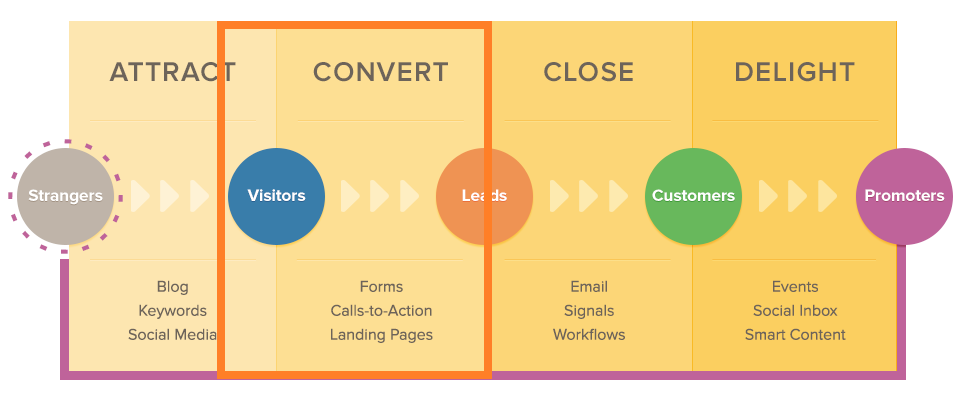
Your blog is the highest-leverage inbound asset a B2B SaaS company can build. Unlike social media (where content has a 24-48 hour lifespan) or paid ads (where visibility stops when budget stops), blog content compounds. A well-optimized article can drive qualified traffic for years after publication.
HubSpot found that marketers who prioritize blogging are 13x more likely to see positive ROI. But the key word is “prioritize” — a blog that publishes generic content without a keyword strategy, without internal linking, and without conversion paths is just a content graveyard.
To make blog content generate B2B SaaS leads:
- Target problem-aware keywords. Write for the specific problems your ICP searches for — “how to reduce SaaS churn” outperforms “SaaS churn definition” because it signals intent to act.
- Build topic clusters. Group related articles around pillar pages. This builds topical authority with search engines and creates natural internal linking paths that keep readers moving deeper into your funnel.
- Add conversion paths to every post. Every article should include at least one relevant CTA — a lead magnet, demo request, free trial link, or newsletter signup. Match the CTA to the reader’s awareness stage.
- Invest in evergreen content that maintains relevance, supplemented by timely content that captures trending interest. Gate high-value content like white papers and benchmarking reports behind lead capture forms.
Best for: B2B SaaS, professional services, and consultancies where buyers research extensively before purchasing.
2. Growth-Driven Website Design
Your website is the conversion engine that every other inbound channel feeds into. If your site doesn’t convert visitors into leads, every dollar spent on content, SEO, and social media is partially wasted.
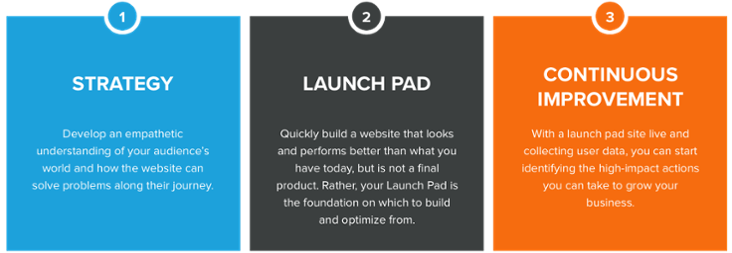
Growth-driven design (GDD) replaces the traditional “redesign every 2-3 years” approach with continuous optimization based on real user data. The process follows three phases: strategy (define buyer personas and conversion goals), launch (ship a focused initial version), and continuous improvement (test and iterate based on performance data).
For B2B SaaS, the elements that most impact inbound lead conversion are:
- Homepage messaging that speaks to your ICP’s pain (not your product’s features)
- Clear conversion paths from every page — visitors should never be more than one click from a demo request or trial signup
- Social proof placement at decision points — logos, testimonials, and case studies near forms and CTAs
- CRO testing to systematically improve conversion rates on your highest-traffic pages
Best for: Early-stage and growth-stage companies where the website is the primary sales tool. GDD is especially valuable when you’re still learning which messaging resonates with your market.
3. Landing Pages
Landing pages strip away the distractions of your main website and focus on a single offer with a single call-to-action. This focus is why landing pages consistently outperform standard website pages for lead generation — HubSpot found that companies with 40+ landing pages generate 12x more leads than those with 5 or fewer.
For B2B SaaS, effective landing pages serve specific funnel stages:
- Top of funnel: Lead magnet download pages (ebooks, templates, benchmarking reports) — capture email in exchange for value
- Middle of funnel: Webinar registration, product demo request, case study downloads — capture more qualification data
- Bottom of funnel: Free trial signup, pricing calculator, consultation booking — minimize friction for ready-to-buy prospects
The key to landing page performance is matching the message to the traffic source. A visitor arriving from a Google search for “how to reduce SaaS churn” needs a different landing page than someone clicking a retargeting ad after visiting your pricing page. Build dedicated pages for each major traffic source and campaign, and use conversion tracking to measure which pages drive actual pipeline, not just form submissions.
Best for: All B2B SaaS companies, especially those running paid campaigns or launching specific offers.
4. Organic Social Media
Social media for B2B SaaS isn’t about going viral. It’s about building trust with the specific decision-makers in your ICP over time. The platforms that matter most for B2B inbound lead generation:
LinkedIn: The primary B2B social channel. Use it for thought leadership content from founders and team members, company page updates, and direct engagement with prospects. LinkedIn posts have a 5-7 day shelf life (much longer than other platforms), and the algorithm rewards engagement-driven content — polls, personal stories, and contrarian takes tend to outperform product-focused posts.
X (formerly Twitter): With 500M+ monthly users, X remains valuable for building founder personal brands, joining real-time industry conversations, and distributing content to engaged audiences. Particularly effective for dev-tools and product-led SaaS companies.
YouTube: The most underutilized B2B channel. Long-form educational content (tutorials, product walkthroughs, industry analysis) builds deep trust and drives high-intent traffic. YouTube videos also rank in Google search results, creating a dual-channel SEO benefit.
The key metric for B2B organic social isn’t followers or impressions — it’s qualified conversations started. Track how many demo requests, trial signups, or inbound inquiries originate from social engagement. Conversion tracking with UTM parameters makes this measurable.
Best for: All B2B SaaS companies. LinkedIn is nearly mandatory for B2B; YouTube and X are high-value additions depending on your ICP’s behavior.
5. Paid Social and Retargeting
Paid social accelerates inbound lead generation by putting your best content and offers in front of precisely targeted audiences. For B2B SaaS, the most effective paid social strategies are:
- LinkedIn Ads: Target by job title, company size, industry, and seniority. Higher CPM than other platforms, but the targeting precision means you’re reaching actual decision-makers. Lead gen forms that pre-fill contact information reduce friction dramatically.
- Meta (Facebook/Instagram) retargeting: Retarget website visitors who engaged with specific pages (pricing, product, case studies) but didn’t convert. Retargeting audiences are 70% more likely to convert because they already know your brand.
- Content promotion: Use paid distribution to amplify your highest-performing organic content — blog posts, case studies, and lead magnets — to audiences who match your ICP but haven’t discovered you yet.
The critical distinction: paid social for B2B SaaS should drive pipeline, not just leads. Track cost per qualified opportunity, not just cost per form fill. A $50 lead from LinkedIn that becomes a $50K deal is infinitely more valuable than a $5 lead from Facebook that never responds to sales outreach.
Best for: B2B SaaS companies with average contract values above $5K/year, where the unit economics support paid acquisition costs.
6. SEO (Search Engine Optimization)
SEO is the compounding engine behind every other inbound channel. When your content ranks for the keywords your ICP searches, you generate leads without ongoing ad spend. The top Google result captures 33% of all search traffic for a given query — and in B2B, those searchers often have high purchase intent.
For B2B SaaS, the SEO strategies that drive pipeline (not just traffic) are:
- Pain-point keywords: Target “how to solve [problem]” queries rather than definition queries. These searchers are actively looking for solutions.
- Comparison and alternative keywords: “[Competitor] alternatives” and “[Tool A] vs [Tool B]” queries capture bottom-of-funnel buyers evaluating options.
- Programmatic SEO: Create templated pages at scale for long-tail keyword patterns — “[Function] for startups,” “[Industry] software,” etc. This dramatically expands your search footprint with manageable effort.
- Technical SEO: Site speed, mobile optimization, schema markup, and internal linking structure directly impact rankings. Modern teams integrate GTM engineering approaches to drive search visibility alongside traditional SEO.
Best for: All B2B SaaS companies. SEO takes 3-6 months to show results but delivers the lowest cost-per-lead of any channel at scale. A strong CRO strategy ensures the traffic SEO generates actually converts.
7. Email Marketing and Nurture Sequences
Email remains the highest-ROI marketing channel — $36 returned for every $1 spent, according to Litmus. For B2B SaaS, email marketing serves two distinct inbound functions: nurturing leads who aren’t ready to buy, and activating trial users toward paid conversion.
Effective B2B SaaS email strategies:
- Behavior-triggered sequences: Send specific emails based on what a prospect did — downloaded a whitepaper, visited the pricing page, started but didn’t complete a trial signup. Behavioral triggers outperform time-based sequences because they match the prospect’s current intent.
- Newsletter content: Regular, valuable content keeps your brand top-of-mind with prospects who aren’t ready to buy today but will be in 3-6 months. The newsletter should provide genuine insight, not just product updates.
- Segmented campaigns: Segment your audience by industry, company size, funnel stage, and behavior. A CFO evaluating your product needs different messaging than a marketing manager who just downloaded a template.
Best for: All B2B SaaS companies, especially those with longer sales cycles where prospects need multiple touchpoints before converting.
8. PPC (Pay-Per-Click) Search Advertising
PPC targets people who are actively searching for solutions — making it one of the highest-intent inbound channels available. When someone searches “best CRM for startups” and clicks your ad, they’re already in buying mode.
For B2B SaaS PPC to generate pipeline (not just clicks):
- Bid on high-intent keywords — “buy,” “pricing,” “demo,” “free trial,” “[category] software” — rather than informational keywords better served by SEO
- Match ad copy to landing page copy — message consistency from search query to ad to landing page dramatically improves conversion rates
- Use negative keywords aggressively — exclude job seeker terms, free/cheap modifiers, and irrelevant industries to protect budget
- Track to pipeline, not just leads — integrate your CRM with Google Ads to optimize for conversions that generate revenue, not just form fills
PPC delivers fast results but doesn’t compound like SEO or content. Use it for immediate pipeline when you need it, and invest the revenue it generates into organic channels that reduce your long-term dependence on paid acquisition.
Best for: B2B SaaS companies with high ACVs ($10K+/year) where the economics support $50-200+ per qualified lead. Also valuable for early-stage companies testing messaging and value propositions before investing in long-term SEO.
9. Guest Blogging and Content Partnerships
Guest content places your expertise in front of established audiences that already trust the publication. For B2B SaaS, this serves dual purposes: brand building (positioning founders as industry experts) and SEO (earning authoritative backlinks that improve your domain’s ranking power).
To make guest blogging generate actual leads:
- Target publications your ICP reads — industry newsletters, SaaS-focused blogs, venture capital firm content platforms. A single article in a publication with 50K relevant subscribers can generate more qualified leads than a month of social media posting.
- Include a strategic CTA in your bio — don’t just link to your homepage. Link to a specific lead magnet or landing page relevant to the article’s topic.
- Repurpose content across channels — turn guest post insights into LinkedIn posts, Twitter threads, and email newsletter content to maximize the investment.
Consider this a growth strategy that compounds: each published piece builds your reputation, backlink profile, and referral traffic simultaneously.
Best for: Founders, agency owners, and B2B SaaS companies building thought leadership. Especially valuable for early-stage companies that need to borrow credibility from established platforms.
10. Speaking Engagements and Podcast Appearances
Podcast appearances and speaking gigs are the highest-trust inbound channel. When a prospect listens to you speak for 30-60 minutes on a podcast, they develop a level of familiarity and trust that no ad or blog post can match.
For B2B SaaS founders and executives:
- Target niche podcasts over large ones. A podcast with 500 listeners in your exact ICP is more valuable than one with 50,000 general business listeners. The conversion rate from targeted podcast appearances can be 10-50x higher.
- Prepare a specific offer for listeners. Create a dedicated landing page (“/podcast” or “/[show-name]”) with a relevant lead magnet. This makes attribution trackable and gives listeners a clear next step.
- Repurpose aggressively. One podcast appearance can become 5-10 pieces of content: audiograms for social media, blog posts summarizing key points, email newsletter content, and video clips if the interview was recorded.
Best for: Founders, CEOs, and subject matter experts at B2B SaaS companies. Particularly powerful when combined with a marketing agency that can manage the outreach and content repurposing pipeline.
Building Your Inbound Lead Generation System
The mistake most B2B SaaS companies make with inbound isn’t choosing the wrong channels — it’s trying to do all 10 at once with insufficient resources. The companies that build effective inbound systems start with 2-3 channels, execute them well, and expand only after each one is generating consistent pipeline.
If you’re pre-product-market-fit: Start with SEO + blog content + PPC. SEO builds long-term compounding assets while PPC generates immediate pipeline and helps you test which messaging and keywords convert.
If you’re post-PMF and scaling: Add email nurture, LinkedIn organic, and landing page optimization. You have enough data to segment your audience and enough traffic to run meaningful CRO tests on your conversion pages.
If you’re established and optimizing: Layer in guest content, podcast appearances, paid social, and growth marketing programs that integrate multiple channels into cohesive campaigns.
No matter which channels you choose, the principle stays the same: build systems that attract qualified buyers to your door, pre-educated on why they need what you offer, ready to have a serious conversation about how you can help them grow.
At Delverise, we help B2B SaaS companies build inbound lead generation systems that compound — from startup-stage lead gen to full-funnel pipeline optimization for scaling teams.
Let’s build your inbound engine.