←Back to blog
Growth & Demand GenerationGuideMay 25, 20269 min read
Lead Generation Strategies for Startups: Strategies for Success
Proven B2B lead generation strategies for startup revenue leaders. Capture qualified attention, build lead magnets, and turn traffic into closed pipeline.

As you’ve discovered, B2B marketing is hard. Lead gen in particular can be brutal with the state of the internet today. The world is full of noise and virtually every niche is filled with competition.
The success of your startup depends on standing out from the crowd. How do you capture a high-quality lead’s attention long enough to entice an interaction?
Whether you’re a seasoned marketer or just getting started let’s explore some of the most effective B2B lead generation strategiestion-platforms-complete-platform-comparison-selection-guide-2026″>lead generationai-lead-generation-automation-how-to-10x-your-pipeline-with-artificial-intellige”>lead generation strategies you can start using today.
Lead Generation Strategies
Perhaps the most important aspect of generating leads in B2B is to always remember you are still selling to people. Even the world’s largest companies are comprised of people with problems.
Your target audience should include decision-makers at these companies. The better you can help these people and demonstrate your expertise, the more likely they are to be receptive to your marketing campaigns.
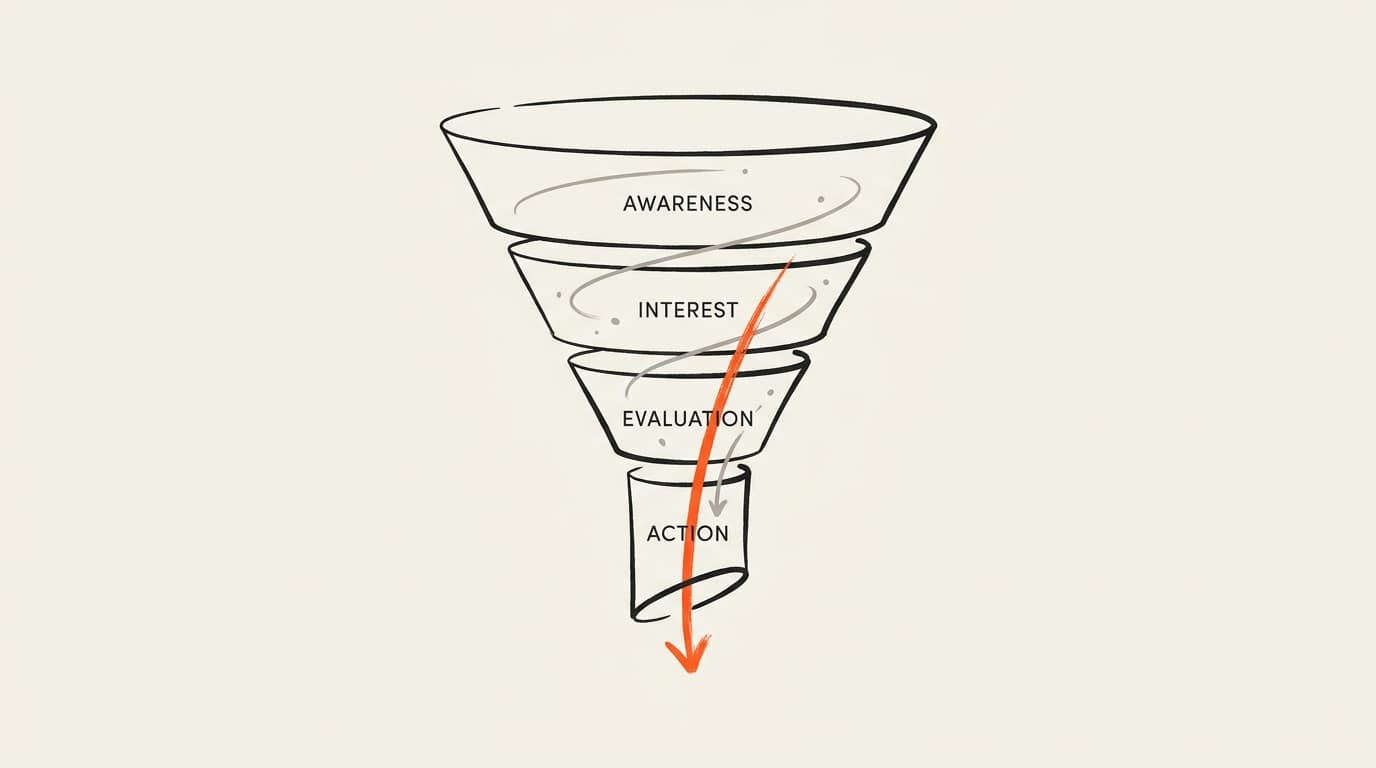
So let’s discuss some ways you can help to fill up your sales funnel with qualified leads and start closing more deals.
Create a Lead Magnet
An email address may not seem like a big ask, but what incentive does somebody have to give you theirs with nothing in return? You want your website visitors to give you a way of contacting them back – otherwise, they are just contributing to the satisfaction of looking at your website’s analytics.
Enter the lead magnet. Lead magnets should be an irresistible offer that your ideal customer can simply not afford to miss out on. The best lead magnets address a key pain point your customer has.
Ebooks
You’ve seen these all over the internet these days- because they work. With Canva, or a free Ebook template from Hubspot, making an Ebook can be a straightforward process. The tricky part is finding the right topic.
You’ll need to consider your topic carefully. You want to complement your main product with something your ideal customer cares deeply about. Solving that problem for them will help drive significant interest in your product and set you apart as trustworthy and helpful.
Including case studies in your Ebook can be particularly effective. Case studies show your expertise in the subject because you’re able to explain why and how something worked – or didn’t work. Case studies from clients or customers of yours also give credibility to your overall digital marketing strategy.
Webinars
A webinar can provide a wide range of prospects with exposure to your product or service and allows for interaction where an Ebook cannot. Live webinars allow for real-time question-and-answer sessions that can build trust and interest.
Webinars can be particularly effective when paired with other methods in this article. Promotion of the webinar via social media, forums, and paid advertising can help create a large number of top-of-funnel leads – leads still in the brand awareness phase and getting to know your company.
Gated webinars where you gather names and email addresses mean you’ll have the ability to follow up on your webinar with additional information or a newsletter that will help to keep you at the top of your leads’ minds whenever they are ready to purchase or have approval.
Whitepapers
A whitepaper can also act as an effective lead magnet. Whitepapers are typically longer than a blog post but shorter than an Ebook. They are informative and in-depth and provide readers with valuable information and insights on a particular topic or industry.
Like a webinar, whitepapers become increasingly effective when paired with promotion. A whitepaper on your site is great, but you need people to see it to be useful. LinkedIn posts, Slack groups, and email marketing can help get eyes on your whitepaper and drive leads into your marketing funnel.
Your whitepaper should leave your leads with the impression that you or your company is a thought leader in the industry. This helps establish a reciprocal relationship and trust with your leads that will help conversion rates.
Content Marketing
Content these days can take many forms. Traditionally, content marketing is synonymous with blogs but content can be videos, podcasts, or infographics.
Search engine optimization (SEO) will play a key role in the written content being seen. Search engine rankings take time though, so content marketing is best as a long-term strategy. Semrush has an article on their blog outlining the time it takes to see results from SEO which is typically 6-12 months.
When paired with a good lead magnet, content marketing has the potential to become an investment providing sustained inbound leads over a long period of time.
Tips for Effective Content Marketing
Making content marketing worth your time takes effort and expertise. Too many businesses subscribe to the theory, “if you build it, they will come.” You must consider why Google would rank your site at the top of their results for a given term.
Do Your Research
Keyword research deserves its own topic, but keyword research is essential to your content planning. Good keyword research will give you a path to follow for your content. You will typically start with easier to rank for – but typically lower search volume terms. As you build your domain’s authority with Google you’ll take on more competitive terms and snowball your search volume with time.
Understand the Search Intent
The most important part of SEO is search intent. If your content does not match the search intent of the user then your article won’t rank well – no matter how authoritative your site is.
The best way to understand what type of content to create for a given term is to simply Google it. Is Google rewarding videos? List style articles? Long-form content?
You’ll want to match the content style as Google is giving a clear signal as to what types of content it is rewarding for that search term based on what they believe the search intent is for.
Links Matter
Backlinks are hyperlinks from other websites to web pages on your site. These backlinks are a significant ranking factor for search engines.
Backlinks are important to Google because they are a strong signal that your content is valuable and trustworthy.
Building links is a complicated and specialized skill and will typically be the most difficult part of your content marketing efforts.
LinkedIn Marketing
Focusing on social media platforms for lead generation is typically thought of as a B2C strategy. With platforms like LinkedIn, however, social media is an excellent lead generation tool for B2B as well.
LinkedIn is a great starting point for an outbound lead generation campaign because you can easily identify the specific people or B2B buyers within companies that you want to get in touch with.
There are some key points to consider when looking for potential customers on LinkedIn.
Optimize Your Profile
The better care you take of your profile, the more trustworthy you appear and your profile will have better visibility in search.
An optimized profile should include a professional headshot, a compelling headline, and a complete summary including targeted keywords.
You should also be customizing your profile’s URL and adding your contact information for potential customers to easily get in touch.
Build a Strong and Targeted Network
Your network should be filled with professionals in positions that stand to benefit the most from your product, are active on LinkedIn, and are within your ideal industries.
The next step is to engage with your network. Comment and share their posts. Interact with new people and expand your network through people you encounter on these posts and get involved in conversations.
The more effort you put into your network, the more you will benefit later.
Share Valuable Content
As an extension of interacting with your network, you should also be creating your own valuable content as well.
Your content should not be focused on self-promotion. Pick your spots on when you will plug your product.
By sharing content that is genuinely helpful to your audience, you will showcase your expertise to potential customers and encourage them to interact with you. The more interaction you have will increase your opportunity to convert your audience into leads.
Paid Advertising
Content marketing, lead magnets, and LinkedIn marketing are all great but they all take time to have an effect.
That’s where paid advertising comes in. If you need sales now, there is no better way than paid advertising.
Main platforms for B2B advertising:
Google Ads
If your product is focused on providing a solution for a particular problem or serving a specific niche – pay-per-click (PPC) ads can be an effective way to get in front of prospects with a strong buying intent.
Once a potential lead has visited your site you may choose to retarget them with retargeting ads to help reinforce brand awareness.
LinkedIn Paid Options
LinkedIn offers options for paid ad formats, sponsored content, and sponsored InMail to reach out directly to industries and positions you are targeting.
Paid Lead Generation Considerations
Paid acquisition channels are able to fill a sales funnel much quicker than the other methods we’ve discussed so far. But, to do paid lead generation correctly, there are a few things you’ll need to consider.
Create Compelling Ads
Remember the world is filled with noise and ads are generally going to be glossed over by most people on sites. Your ad campaign needs to be compelling and specific to your target market so you capture the attention of new leads.
A good ad makes it clear to potential buyers that you completely understand their problem. You must be specific with this or you will end up capturing the attention of nobody.
Also, include a clear call-to-action (CTA) to encourage people to take the next step in contacting you and convert them into true leads.
It is important to A/B test your ads to narrow in on the most effective ad copy and design you can for conversion.
Landing Pages
Each ad you run should be paired with a specific landing page for that ad. The landing page should closely match the aesthetic of the ad and provide a continuation of the messaging used in the ad.
Your landing page should also strongly feature social proof. Social proof is one of the most effective elements in helping convert potential customers into paying customers.
Good landing pages will also reduce the number of distractions a person clicking the ad can have. Pairing an ad with a good lead magnet will help you move leads through your sales funnel and capture contact information for your CRM and email list for future follow-ups.
Your landing page should also feature a strong CTA with few other options on the page. You don’t need to close a deal at this step, you just need to move the prospect into a consideration phase of your product or SaaS.
Wrapping Up
You have a wide range of lead generation tactics to get your product in front of prospective customers.
Try out a lot of methods, there is no magic formula here. The Pareto Principle certainly applies to lead generation. 20% of what you do will drive 80% of your leads. Your goal is to find that 20% and exploit it to its full potential.
Running these plays in-house works when you have the team, the time, and the patience to test channels until one compounds. The other path is hiring an operator to install the full lead gen stack (positioning, channel mix, outbound systems, and the reporting layer underneath) so your founders can stay focused on product and customers. If that sounds closer to where you are, delverise builds GTM and revenue systems for Series A to C teams, and you can take a look when it’s useful.
Read next