←Back to blog
Growth & Demand GenerationGuideMay 20, 202612 min read
Lead Generation Platforms: Complete Platform Comparison & Selection Guide [2026]
Lead generation platforms in 2026 span five categories from all-in-one suites to ABM tools. Compare pricing, features, and selection criteria for your stack.
In the competitive B2B landscape of 2026, generating a consistent flow of high-quality leads is more than a marketing goal. It is the lifeblood of sustainable growth. According to recent industry research, 50% of marketers consider lead generation a top priority in their marketing campaigns, with organizations generating an average of 1,877 leads per month. The stakes are high: the mean cost per lead across all industries is $198.44, making platform selection a critical investment decision that directly impacts bottom-line performance.
While the term “lead generation” is ubiquitous, the strategies and technologies that power it have undergone a profound evolution. The era of fragmented tools and disjointed point solutions is giving way to a more integrated, platform-centric approach. This shift is driven by compelling data: 96% of marketers have used a marketing automation platform for their business or are planning to use it, and 63% of marketers are planning to raise their marketing automation funding this year. For marketing directors, revenue operations managers, and sales leaders, navigating this complex ecosystem of lead generation platforms is a critical challenge that requires both strategic thinking and tactical execution.
This guide provides a comprehensive overview of the lead generation platform landscape, offering a clear distinction between platforms, tools, and point solutions, and a framework for selecting the right technology stack to drive growth. We will examine the five major platform categories, analyze pricing models and total cost of ownership, and provide actionable selection criteria based on company size and strategic objectives.
Answer: A lead generation platform is the system a B2B team uses to capture, enrich, qualify, route, nurture, and measure leads across the revenue motion. The right platform depends less on feature count and more on whether it can connect audience data, CRM records, enrichment, outbound or inbound activation, attribution, and reporting into one workflow.
- All-in-one platforms work when the team needs one operating hub for marketing and sales.
- Sales intelligence platforms work when account and contact data quality is the constraint.
- ABM and intent platforms work when account prioritization and buying signals drive the motion.
- Engagement and automation platforms work when follow-up speed, nurture, and outbound execution are the bottleneck.
The best choice is the platform stack your team can operate cleanly, measure accurately, and improve every month.
1. Lead Generation Platform Landscape and Evolution
The modern lead generation ecosystem is characterized by a convergence of capabilities that were once siloed. A lead generation platform is an integrated suite of tools designed to manage the entire lead lifecycle, from initial attraction and capture to nurturing, qualification, and conversion. This contrasts with point solutions or tools, which address a single function, such as email marketing, social media scheduling, or landing page creation. Research shows that companies using integrated platforms achieve 34% higher conversion rates than those using disconnected tools, while platform consolidation improves data quality and reduces operational costs by 40%.


The evolution of lead generation platforms has been driven by several key market trends. The early 2000s were dominated by basic CRM systems and standalone email marketing tools. The mid-2000s saw the rise of marketing automation platforms like Marketo and HubSpot, which began to consolidate these functions. The 2010s were marked by a wave of acquisitions and the emergence of data intelligence and ABM platforms, reflecting a growing emphasis on data quality and targeted outreach. Today, in 2026, the landscape is defined by AI-native platforms, unified data ecosystems, and a focus on real-time personalization and privacy-first solutions. The marketing automation industry is now worth $344.8 billion worldwide, with expectations to reach $13.71 billion by 2030.
Understanding the different categories of lead generation platforms is the first step toward making an informed investment. The ecosystem can be broadly segmented into five key areas: All-in-One Marketing and Sales Platforms, Sales Intelligence and Data Platforms, Account-Based Marketing Platforms, Conversation and Engagement Platforms, and Marketing Automation and Nurturing Platforms.
2. All-in-One Marketing and Sales Platforms
All-in-one marketing and sales platforms represent the most comprehensive approach to lead generation, offering a tightly integrated suite of tools that span the entire customer lifecycle. These platforms are designed to serve as a central hub for all marketing and sales activities, providing a single source of truth for customer data and enabling seamless collaboration between teams. According to industry analysis, all-in-one platforms reduce implementation time by 60% compared to multi-vendor approaches.
The leading players in this category include HubSpot, Salesforce, ActiveCampaign, and Zoho CRM. Each of these platforms offers a wide range of features, including CRM, email marketing, marketing automation, sales automation, landing page creation, social media management, and analytics. HubSpot is known for its user-friendly interface and strong inbound marketing capabilities, with pricing starting at $20/month for the Starter plan and $890/month for Professional. Salesforce is a highly customizable and scalable platform favored by large enterprises, with Marketing Cloud Engagement starting at $1,250 per org per month. ActiveCampaign offers a powerful combination of marketing automation and CRM at a competitive price point, while Zoho CRM provides a broad suite of business applications.
| Platform | Key Features | Target Audience | Starting Price | Strengths |
|---|---|---|---|---|
| HubSpot | CRM, Marketing Hub, Sales Hub, Service Hub, CMS Hub | SMBs, Mid-Market | $20/month | User-friendly, strong inbound marketing, extensive integrations |
| Salesforce | Sales Cloud, Marketing Cloud, Service Cloud, Commerce Cloud | Enterprise, Mid-Market | $25/user/month | Highly customizable, scalable, extensive app ecosystem |
| ActiveCampaign | Marketing Automation, CRM, Email Marketing, Sales Automation | SMBs, Mid-Market | $29/month | Powerful automation, competitive pricing, strong email marketing |
| Zoho CRM | CRM, Sales, Marketing, Support, and more in Zoho One suite | SMBs, Mid-Market | $14/user/month | Broad suite of applications, affordable, good value for money |
When evaluating all-in-one platforms, it is essential to consider both the breadth of features and the depth of functionality in each area. The 76% of companies that receive ROI within the first year of implementing marketing automation demonstrate the value of these integrated solutions.
3. Sales Intelligence and Data Platforms
In the data-driven world of B2B sales, having access to accurate and comprehensive information about prospects and target accounts is paramount. Sales intelligence and data platforms provide sales and marketing teams with the data they need to identify, prioritize, and engage with high-potential leads. These platforms offer company firmographics, contact data, technology stacks, and real-time buying signals. With 97% of people ignoring cold calls, data-driven prospecting has become essential.
The market for sales intelligence platforms is dominated by ZoomInfo, Apollo.io, Cognism, and LinkedIn Sales Navigator. ZoomInfo is a market leader, known for its extensive database and advanced features for data enrichment and intent data. Apollo.io has emerged as a strong competitor, offering a unified platform with transparent pricing starting at $49/user/month, compared to ZoomInfo’s quote-based pricing around $300/month per user. Cognism focuses on providing high-quality, GDPR-compliant data for European markets, while LinkedIn Sales Navigator leverages LinkedIn’s vast professional network for prospecting and social selling.
| Platform | Key Features | Data Coverage | Pricing Model | Strengths |
|---|---|---|---|---|
| ZoomInfo | B2B Database, Intent Data, Data Enrichment, Lead Builder | Global, North America focus | Quote-based (~$300/user/month) | Extensive data, advanced features, strong market reputation |
| Apollo.io | B2B Database, Sales Engagement, Analytics, Job Changes | Global | Tiered, free plan available ($49-79/user/month) | Unified platform, affordable, good for SMBs and mid-market |
| Cognism | B2B Database, GDPR-compliant data, Chrome Extension | Global, Europe focus | Quote-based | High-quality European data, GDPR compliance, easy to use |
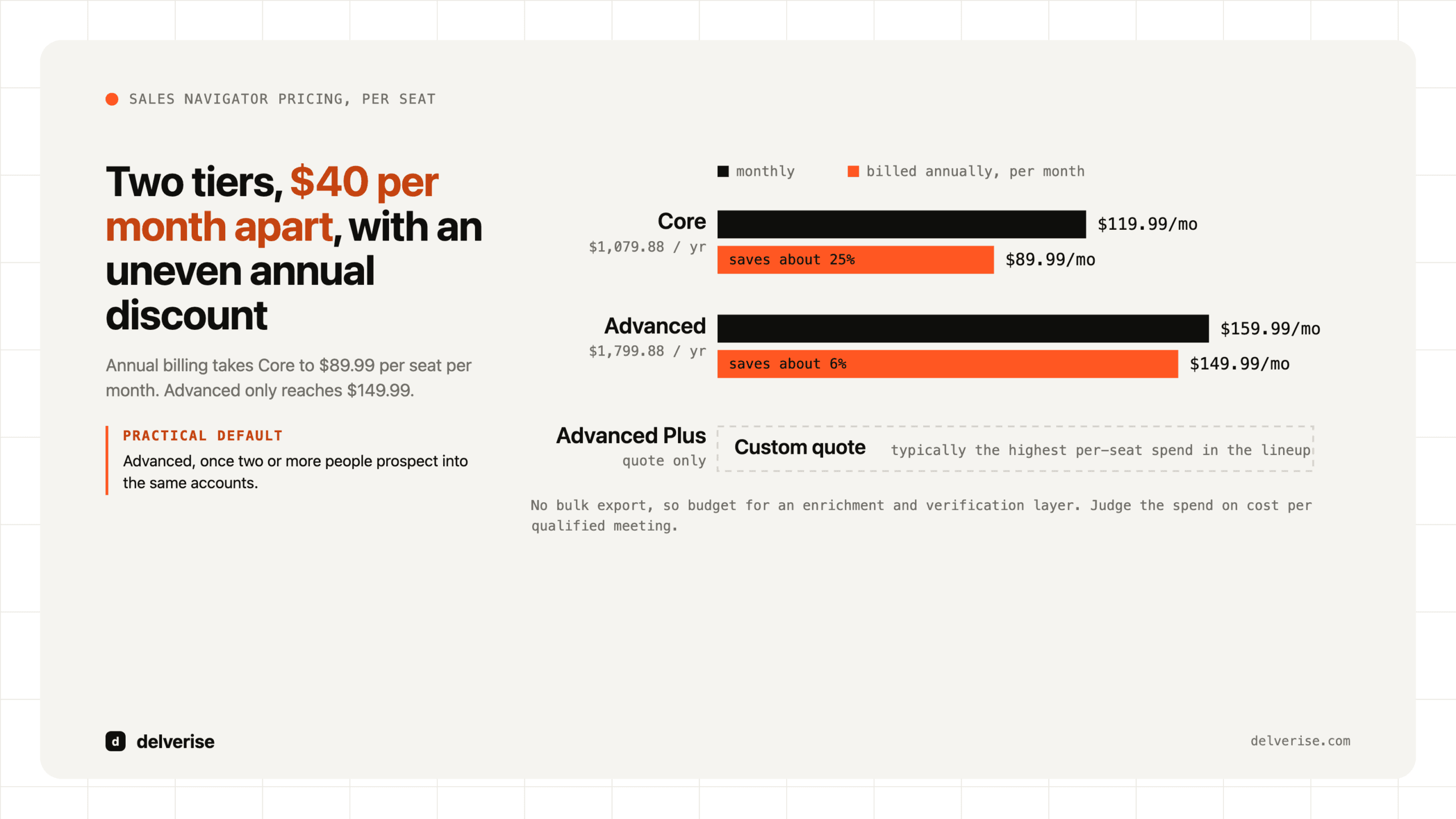
| LinkedIn Sales Navigator | Advanced Search, Lead Recommendations, InMail, CRM Integration | LinkedIn’s network | $99.99/user/month | Access to LinkedIn’s network, social selling features |
When selecting a sales intelligence platform, data quality and coverage are the most critical factors. The platform’s ability to provide accurate and up-to-date information is essential, as 27% of marketers say organic search generates the most leads, making data-driven targeting crucial.
4. Account-Based Marketing Platforms
Account-Based Marketing (ABM) has emerged as a dominant strategy for B2B organizations looking to target and engage high-value accounts. The statistics are compelling: 87% of ABM marketers say ABM outperforms other marketing initiatives, and 208% is how much revenue can increase with an ABM strategy. ABM platforms are purpose-built to support this strategy, providing the tools and data needed to identify, prioritize, and orchestrate marketing and sales efforts across a defined set of target accounts.
The ABM platform market is led by Demandbase, 6sense, Terminus, and RollWorks. Demandbase offers a comprehensive ABM platform with a strong focus on advertising, personalization, and analytics. 6sense is known for its powerful AI and predictive analytics capabilities, with 91% of marketers using intent data to target and prioritize accounts. Terminus provides a full-funnel ABM platform with a strong emphasis on multi-channel engagement, while RollWorks offers an ABM platform particularly popular with small and mid-sized businesses.
| Platform | Key Features | Target Audience | Pricing Model | Key Differentiator |
|---|---|---|---|---|
| Demandbase | ABM, Advertising, Personalization, Analytics, Data | Mid-Market, Enterprise | Quote-based | Comprehensive platform, strong advertising capabilities |
| 6sense | AI & Predictive Analytics, Intent Data, Orchestration | Mid-Market, Enterprise | Quote-based | Powerful AI and predictive capabilities, 84% use AI for targeting |
| Terminus | ABM, Email, Chat, Advertising, Measurement | Mid-Market, Enterprise | Quote-based | Full-funnel ABM, 72% engagement improvement with multi-channel |
| RollWorks | ABM, Advertising, Retargeting, Measurement | SMBs, Mid-Market | Tiered, free plan | Easy to use, strong display advertising, good for SMBs |
The effectiveness of ABM platforms is demonstrated by the fact that 92% of B2B companies now rely on ABM to enhance customer retention, and 68% higher account win rates are achieved with a strong ICP.
5. Conversation and Engagement Platforms
In an increasingly digital world, the ability to engage with prospects and customers in real-time has become a critical differentiator. Conversation and engagement platforms leverage a combination of live chat, chatbots, and AI-powered automation to create a personalized and engaging experience for website visitors. These platforms are essential for organizations looking to accelerate their sales cycle, as 44% of sales reps are too busy to follow up with leads, making automated engagement crucial.
The conversation and engagement platform market is led by Drift, Intercom, Qualified, and Chili Piper. Drift is a pioneer in the conversational marketing space, with a strong focus on generating qualified pipeline for sales teams. Intercom offers a comprehensive customer communications platform that supports a wide range of use cases, from lead generation and customer support to product onboarding. Qualified is a conversational marketing platform built specifically for Salesforce customers, with a tight integration that allows for real-time engagement with target accounts. Chili Piper is a scheduling and routing platform that helps organizations connect with leads faster.
| Platform | Key Features | Target Audience | Pricing Model | Best For |
|---|---|---|---|---|
| Drift | Conversational Marketing, Chatbots, AI, Lead Routing | Mid-Market, Enterprise | Quote-based | Sales-focused teams needing qualified pipeline |
| Intercom | Customer Communications, Live Chat, Chatbots, Product Tours | SMBs, Mid-Market, Enterprise | Tiered, from $39/month | Comprehensive customer engagement and support |
| Qualified | Conversational Marketing, Chatbots, Live Chat, for Salesforce | Mid-Market, Enterprise | Quote-based | Salesforce-native ABM and conversational marketing |
| Chili Piper | Scheduling, Routing, Booking, for Inbound Leads | Mid-Market, Enterprise | Tiered, from $15/user/month | Speed-to-lead optimization and meeting scheduling |
The impact of conversation platforms is significant, with 68% of marketers saying social media marketing has helped them generate more leads, and real-time engagement being a key component of modern lead generation strategies.
6. Marketing Automation and Nurturing Platforms
Marketing automation platforms are the workhorses of modern lead generation, providing the tools needed to nurture leads at scale and guide them through the buyer’s journey. These platforms automate repetitive marketing tasks, such as email campaigns, social media posting, and lead scoring. The ROI is compelling: marketing automation generates $5.44 in revenue for every $1 spent, and 75% of email revenue is obtained from triggered personalized emails.
The marketing automation landscape includes several established leaders: Marketo Engage (Adobe), Pardot (Salesforce), Eloqua (Oracle), and ActiveCampaign. Marketo, Pardot, and Eloqua are enterprise-grade platforms with sophisticated workflow automation, advanced lead scoring, and deep analytics capabilities. ActiveCampaign has gained significant traction with its powerful automation capabilities and affordable pricing, with 71% of B2B marketers using marketing automation for email marketing.
| Platform | Key Features | Target Audience | Pricing Model | Best For |
|---|---|---|---|---|
| Marketo Engage | Lead Management, Email Marketing, Lead Nurturing, Analytics | Enterprise, Mid-Market | Quote-based, from $895/month | Enterprise-scale automation with deep analytics |
| Pardot | Lead Generation, Lead Management, Email Marketing, ROI Reporting | Mid-Market, Enterprise | Tiered, from $1,250/month | Salesforce-native B2B marketing automation |
| Eloqua | Lead Management, Campaign Management, Sales Enablement | Enterprise | Quote-based | Highly customizable enterprise automation |
| ActiveCampaign | Marketing Automation, CRM, Email Marketing, Sales Automation | SMBs, Mid-Market | Tiered, from $29/month | Powerful automation at competitive pricing |
The effectiveness of marketing automation is demonstrated by the fact that 61% of users say they use marketing automation to generate more leads, and 92% use automation to enhance their qualified lead pipeline.
7. Platform Selection Framework and Integration Strategy
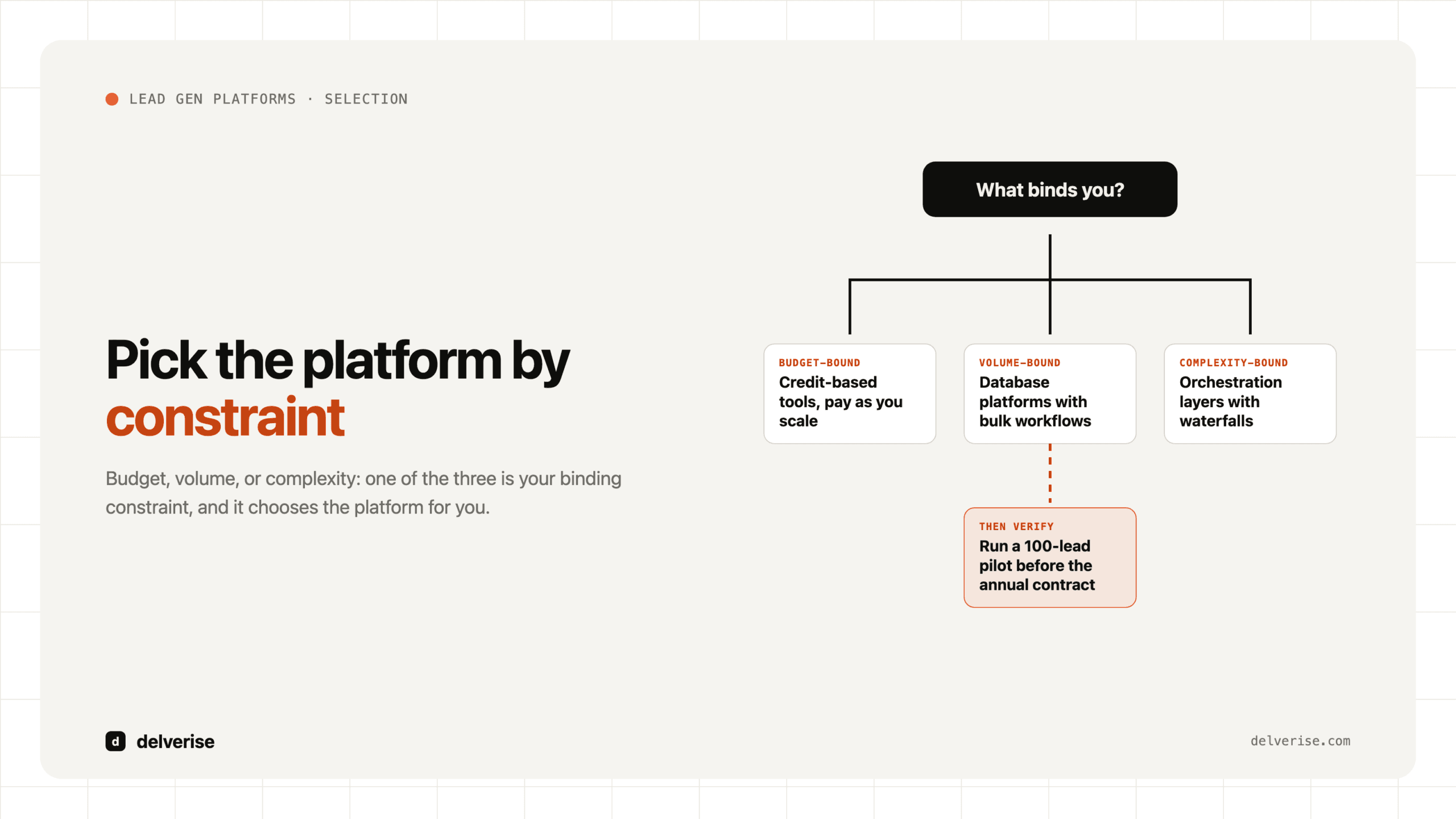
Choosing the right lead generation platform is a critical decision that can have a significant impact on your company’s growth trajectory. A structured framework for evaluating and selecting the platform should take into account your company size, budget, primary use case, and existing technology stack. The decision tree below provides a visual guide for navigating this process.


Beyond the initial selection, a successful platform implementation requires a well-defined integration strategy. Your lead generation platform must seamlessly integrate with your other business-critical systems, such as your CRM, ERP, and business intelligence tools. The data integration market stands at $15.18 billion in 2024 and will reach $30.27 billion by 2030, reflecting the critical importance of integration in modern tech stacks.
The build vs. buy vs. integrate decision is another critical aspect of your platform strategy. While some large enterprises may have the resources to build custom solutions, most organizations will be better served by a combination of buying and integrating best-of-breed platforms. A well-designed tech stack should be both scalable and flexible, allowing you to adapt to changing market conditions and evolving business needs.
8. Pricing Models and ROI Optimization
Understanding the pricing models of lead generation platforms is crucial for making a sound investment decision. Platform pricing can vary significantly, from simple per-user, per-month subscriptions to complex, quote-based contracts. The mean cost per lead across all industries is $198.44, making it essential to understand your total cost of ownership.
| Platform Category | Typical Pricing Model | Starting Price Range | Key Cost Drivers |
|---|---|---|---|
| All-in-One Platforms | Tiered, based on features and contacts/users | $20-$1,250/month | Number of contacts, users, feature tier |
| Sales Intelligence | Quote-based, contract and seat-based, credits | $49-$300+/user/month | Number of users, data credits, feature tier |
| ABM Platforms | Quote-based | Custom pricing | Number of target accounts, feature set |
| Conversation Platforms | Tiered, based on features and contacts/users | $15-$39+/month | Number of users, feature tier |
| Marketing Automation | Tiered, based on contacts and features | $29-$1,250+/month | Number of contacts, feature tier |
Optimizing the ROI of your platform investment requires a clear understanding of your goals and a commitment to measuring your results. Key metrics to track include cost per lead, conversion rate, customer lifetime value, and marketing-influenced revenue. The fact that businesses generate $5.44 in revenue for every $1 spent on lead generation campaigns demonstrates the potential return on investment when platforms are properly implemented and optimized.
Need help choosing and wiring the right lead generation system? delverise builds AI lead generation and GTM systems that connect platform selection, enrichment, CRM workflows, outbound activation, and reporting. Explore AI Lead Generation, CRM Enrichment, GTM Engineering, and Growth Engineering, or apply to work with us.
Frequently Asked Questions
What is a lead generation platform versus a point solution?
A lead generation platform is an integrated suite of tools that manages the entire lead lifecycle, from attraction and capture through nurturing, qualification, and conversion. Point solutions address a single function like email marketing, social scheduling, or landing page creation. Companies using integrated platforms achieve 34% higher conversion rates than those using disconnected tools, and platform consolidation improves data quality while reducing operational costs by 40%.
What are the five main categories of lead generation platforms?
The lead generation ecosystem segments into five categories: All-in-One Marketing and Sales Platforms, Sales Intelligence and Data Platforms, Account-Based Marketing Platforms, Conversation and Engagement Platforms, and Marketing Automation and Nurturing Platforms. This segmentation reflects the convergence of capabilities that were once siloed. The marketing automation industry is now worth $344.8 billion worldwide, with projections to reach $13.71 billion by 2030 as AI-native platforms and unified data ecosystems mature.
How much does an all-in-one marketing platform cost?
All-in-one platform pricing varies widely by vendor and tier. HubSpot starts at $20/month for the Starter plan and $890/month for Professional. Salesforce Marketing Cloud Engagement starts at $1,250 per org per month, with Sales Cloud beginning at $25/user/month. ActiveCampaign starts at $29/month, while Zoho CRM begins at $14/user/month. The mean cost per lead across all industries is $198.44, making platform selection a critical investment decision.
Why are companies moving to integrated lead generation platforms?
Companies are consolidating onto integrated platforms because they deliver measurable performance gains. Integrated platforms produce 34% higher conversion rates than disconnected tools and reduce operational costs by 40% through platform consolidation. All-in-one platforms also cut implementation time by 60% compared to multi-vendor approaches. The momentum is clear: 96% of marketers have used or plan to use a marketing automation platform, and 63% plan to raise their marketing automation funding this year.
Which lead generation platform is best for enterprise companies?
Salesforce is the leading choice for enterprise and mid-market companies because it is highly customizable, scalable, and supported by an extensive app ecosystem. Marketing Cloud Engagement starts at $1,250 per org per month, with Sales Cloud at $25/user/month. For SMBs and mid-market buyers, HubSpot offers a more user-friendly inbound-focused alternative starting at $20/month. 76% of companies receive ROI within the first year of implementing marketing automation.
Read next