←Back to blog
Revenue Intelligence & Data ToolingGuideJuly 13, 20268 min read
GTM Roles in 2026: What Each Job Owns (and When to Hire)
What GTM means, the job titles inside a go-to-market org, what each role owns, and the hiring order from first hire to CRO.
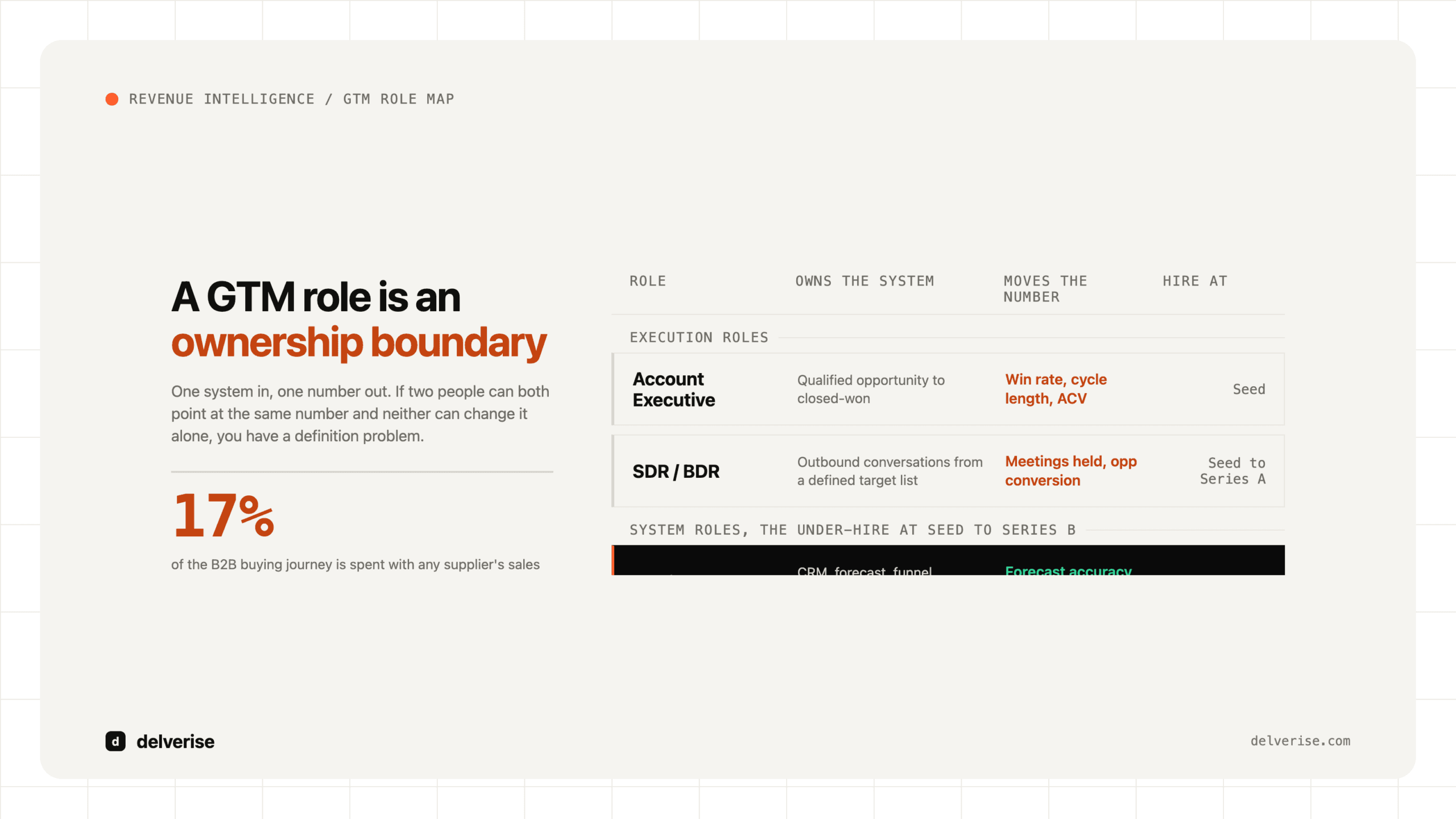
A GTM role is any job that owns a piece of how a company acquires, converts, expands, or retains revenue: sales, marketing, RevOps, MarOps, GTM engineering, customer success, and partnerships. Each role is defined by the system it owns and the metric it moves. Titles shift by stage; the underlying accountabilities stay constant.
Key takeaways
- A GTM role is an ownership boundary. If two people can both point at the same number and neither can change it alone, you have a definition problem, not a talent problem.
- Most Seed to Series B teams over-hire on execution roles (SDRs, AEs, content) and under-hire on system roles (RevOps, GTM engineering) that make the execution roles productive.
- Gartner’s research found B2B buyers spend roughly 17% of their buying journey with any supplier’s sales reps. That single fact reshapes what a modern GTM role has to do outside the call.
- The right sequence at Seed is founder-led sales plus one systems owner. The wrong sequence is three SDRs plus a CRM nobody maintains.
- Job descriptions are a lagging indicator. Define the system, the data, and the metric first, then write the role around it.
What is a GTM role, and how is it different from a sales or marketing job?
Go-to-market (GTM) is the full system a company uses to find, win, and keep customers. A GTM role owns one component of that system end to end: the inputs it consumes, the work it performs, and the output it is measured on.
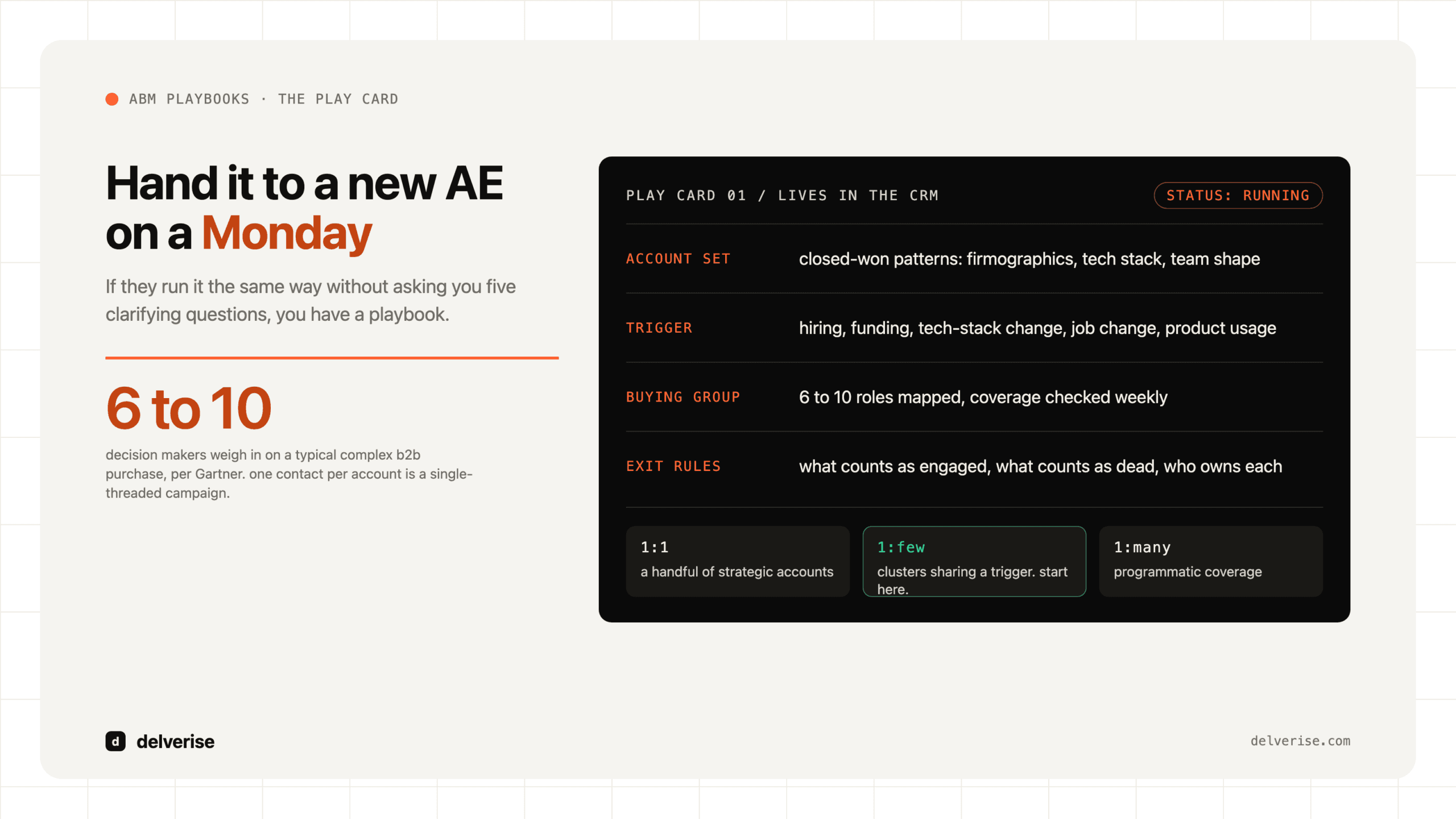
The distinction matters because traditional org charts split by function (sales here, marketing there) while buyers move across functions without noticing the seam. McKinsey’s research on B2B buying found that customers now use around ten channels across a single decision journey, roughly double what it was a decade ago. Gartner’s work on buying groups found that a typical complex B2B purchase involves six to ten decision makers, each arriving with their own independently gathered information.
So a GTM role in 2026 is accountable for a slice of a shared revenue system rather than a departmental silo. A demand gen manager who cannot see which sourced leads converted to closed-won is not running demand gen. They are running a spend report.
Which GTM roles does a B2B SaaS company actually need?
Here is the honest map. Titles vary; the ownership does not.

| GTM role | What it actually owns | Primary metric | Typical hire stage | Common failure mode |
|---|---|---|---|---|
| Founder / CEO (GTM owner) | ICP definition, pricing, first 20 deals, the narrative | Logos and learning velocity | Pre-seed to Seed | Handing off sales before the motion is repeatable |
| Account Executive | Qualified opportunity to closed-won | Win rate, cycle length, ACV | Seed (after founder proves motion) | Hired to “figure out pipeline” instead of close it |
| SDR / BDR | Outbound conversations from a defined target list | Meetings held, opp conversion | Seed to Series A | Given no list, no data, and no messaging system |
| Demand Gen / Growth Marketer | Inbound and paid pipeline sourcing | Pipeline sourced, CAC payback | Series A | Optimizing MQLs that sales ignores |
| RevOps | CRM, forecast, funnel definitions, reporting truth | Forecast accuracy, data completeness | Series A (often too late) | Treated as CRM admin instead of the system owner |
| MarOps | Marketing automation, attribution, lifecycle plumbing | Lead routing SLA, campaign throughput | Series A to B | Rolled into RevOps and starved of time |
| GTM Engineer | Data, enrichment, scoring, automation across the whole funnel | Coverage, match rate, cost per qualified conversation | Seed to Series A | Does not exist, so the work leaks into everyone else’s week |
| Customer Success | Onboarding, adoption, renewal, expansion | NRR, logo retention | Series A | Measured on tickets instead of retained revenue |
What does a GTM engineer do that RevOps and demand gen do not?
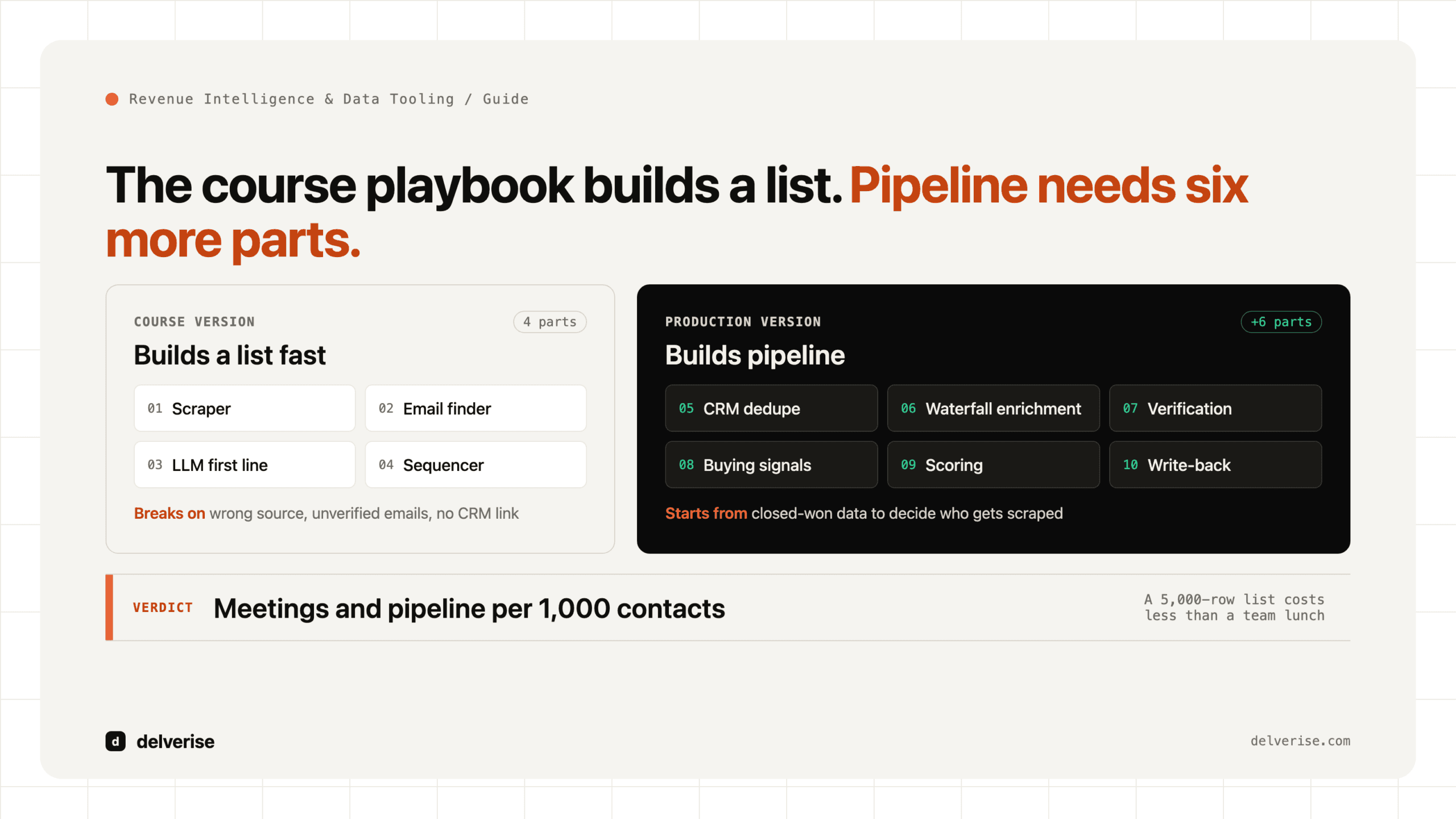
GTM engineering is the newest of these roles and the most misunderstood. A GTM engineer builds the machinery that produces qualified conversations: target account sourcing, data enrichment and waterfalls, scoring logic, routing, sequencing, and the automations that connect them.

RevOps typically owns the record of truth after a deal exists. GTM engineering owns the manufacturing line that creates deals in the first place. In practice a GTM engineer spends their week in the CRM, the enrichment layer, and the automation layer, chaining tools like Clay, Apollo, HubSpot or Salesforce, and n8n into one pipeline that runs without a human copying spreadsheets on Fridays.
Two concrete pieces of that job:
- Data coverage. No single provider has complete contact data for your ICP. A waterfall of chained providers raises match rates well above what any one vendor delivers, and someone has to own that chain, its cost per enriched record, and its decay rate.
- Qualification logic. Lead scoring that reflects real buying intent turns a list into a queue. Without it, reps prioritize by gut feel and your best-fit accounts sit untouched.
If you want the fuller picture of how this role sits inside a revenue system, our GTM engineering overview covers scope and deliverables, and CRM enrichment covers the data layer specifically.
What does the right hiring sequence look like from Seed to Series B?
A worked example. Take a Seed-stage SaaS company at $800K ARR, ACV around $20K, founder-led sales, one AE hired three months ago, pipeline flat.

The instinct: hire two SDRs to “fill the top of the funnel.”
What actually happens: the SDRs arrive to a CRM with 4,000 unsegmented contacts, no enrichment, no scoring, no sequences, and no ICP definition beyond “B2B companies with 50 to 500 employees.” They spend six weeks building lists by hand. Ramp is slow, quality is poor, and by month four the founder concludes outbound does not work.
The alternative sequence:
- Define the ICP with evidence: pull the closed-won accounts, find the shared firmographic and behavioral traits, write them down as filterable criteria.
- Build the data layer: account sourcing, a contact enrichment waterfall, verified emails, and a refresh cadence.
- Build the qualification layer: a scoring model that ranks accounts by fit and observable intent signals.
- Build the routing and sequencing layer so a scored account becomes a task in a rep’s queue automatically.
- Then hire the first SDR into a machine that already produces 200 scored, enriched, message-ready accounts per week.
Same headcount budget, different order. The system role comes before the execution roles it feeds. If you are debating whether to buy or build that layer, our Clay implementation page walks through what a working build looks like and where the tradeoffs sit.
How should you measure a GTM role?
Every GTM role needs one primary metric it can genuinely move, plus a guardrail metric that stops it from optimizing selfishly. An SDR whose only metric is meetings booked will book bad meetings. Pair it with opportunity conversion rate and the behavior corrects itself.
The prerequisite is a funnel that is defined the same way by everyone. Most Seed to Series B companies have three different definitions of “qualified” living in three different tools. Fix that first. Our B2B funnel metrics guide covers which numbers are worth instrumenting and which are vanity.
Should you hire the role or build the system first?
Here is the vendor-neutral answer, including the parts that cut against hiring anyone at all.
Hire in-house when the role is a permanent, high-frequency function tied to your specific product knowledge: AEs, CS, and eventually a RevOps lead. These people compound in value by knowing your customers.
Build the system before you hire when the work is infrastructure: data pipelines, enrichment, scoring, routing, reporting. This work has a large upfront build and a small maintenance tail. Hiring a full-time person to build it once and then maintain it for two hours a week is expensive.
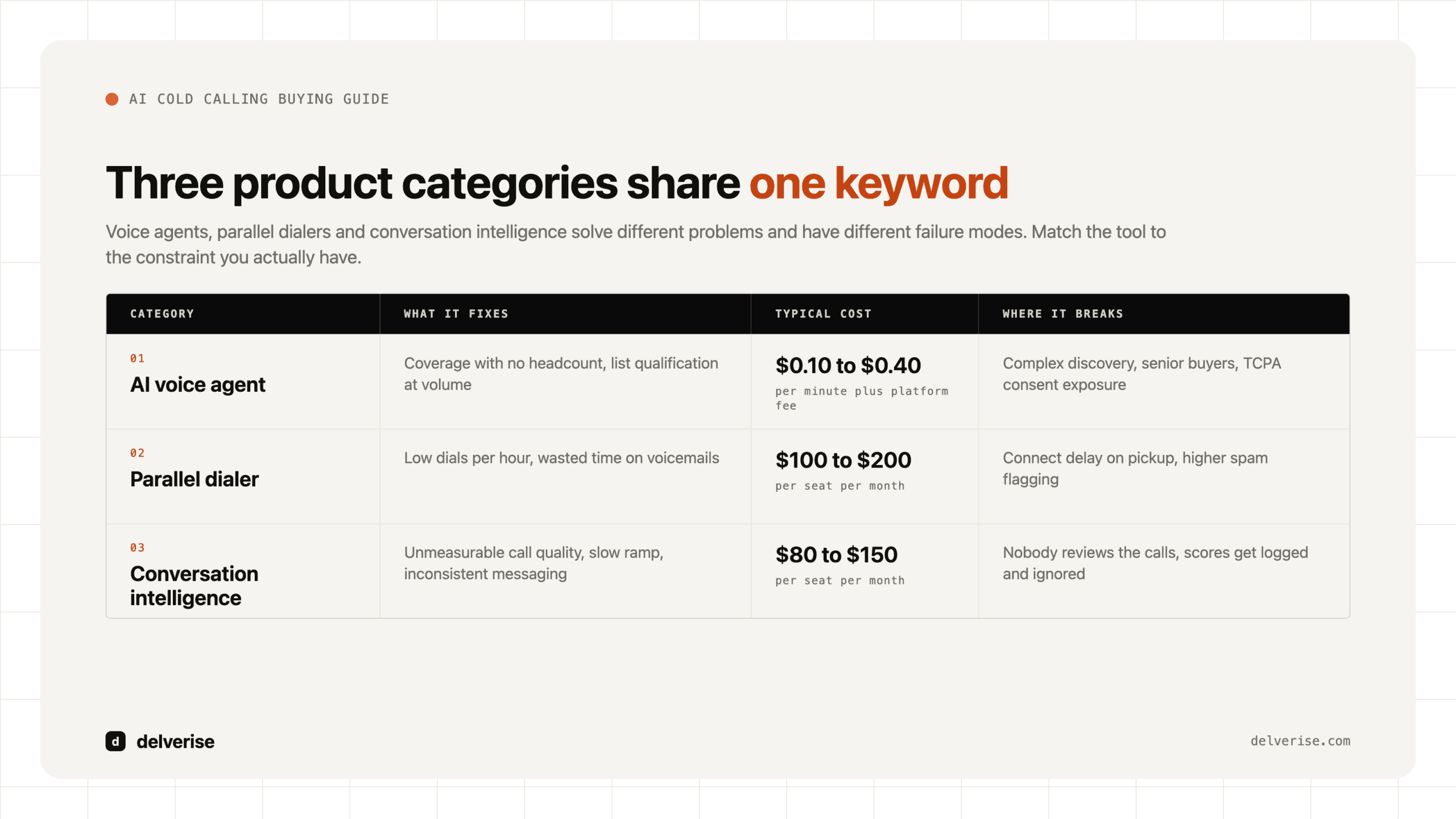
Automate rather than hire when the task is genuinely mechanical: list building, research summarization, data hygiene, first-touch personalization at volume. Be honest about the ceiling here. AI BDR tools automate research and drafting well and break on judgment, and the same holds for most AI sales tools. They raise throughput on a good system and amplify the noise on a bad one.
The trap most teams fall into: they hire humans to compensate for a missing system, then hire more humans when the first ones underperform. Forrester and Gartner have both documented the operational drag this creates as revenue teams scale, and it shows up on the P&L as rising CAC with flat win rates.
What breaks when GTM roles are defined badly?
Four symptoms worth checking against your own team this quarter:
- Orphaned metrics. Pipeline coverage is everyone’s problem, so it is nobody’s job. Name one owner.
- Shadow ops. Your best AE is maintaining a personal spreadsheet because the CRM is untrustworthy. That spreadsheet is a system you do not control and cannot scale.
- Tool sprawl without an owner. Eleven tools, no one accountable for the data flowing between them. Every integration is a silent point of failure.
- Marketing and sales measuring different funnels. If marketing operations counts an MQL that sales does not recognize, both teams will report success while pipeline stalls.
Each of these is a role definition failure wearing the costume of a performance problem.
Frequently Asked Questions
What is a GTM role in a startup?
A GTM role owns a defined component of the revenue system: sourcing demand, qualifying it, closing it, or retaining it. At Seed stage the founder usually holds several of these at once. As the company scales, each component gets a dedicated owner with a primary metric and a guardrail metric.
What is the difference between GTM engineering and RevOps?
RevOps owns the system of record and the reporting truth: CRM architecture, forecast, funnel definitions, and process. GTM engineering owns the acquisition machinery that feeds it: data sourcing, enrichment, scoring, automation, and the connective tissue between tools. Small teams often blend them into one person. Past roughly $5M ARR, they usually separate.
Which GTM role should I hire first at Seed stage?
Hire a systems owner before you hire volume. The first non-founder GTM hire that pays back fastest is usually the person who can build the data, scoring, and automation layer, because they make every subsequent AE and SDR hire ramp faster. Add closers once the motion is documented and repeatable.
Do we still need SDRs if we use AI outbound tools?
Yes, though fewer of them and with a different job. AI handles research, list building, and drafting at volume. Humans handle judgment: reading a live objection, deciding an account is worth a personalized approach, and holding a real conversation. Teams that replace SDRs entirely tend to see reply rates fall as their sequences converge on the same generic patterns everyone else is sending.
How many GTM roles does a Series A SaaS company typically need?
A common shape at Series A is two to four AEs, one to three SDRs, one demand gen owner, one RevOps or GTM engineering owner, and one CS lead. The exact mix depends on ACV and motion. Higher ACV and longer cycles push spend toward AEs and CS; lower ACV and self-serve motions push it toward marketing and automation.
If you are staring at an org chart trying to decide which GTM role to hire next, the more useful question is which part of your revenue system is currently unowned. Answer that, and the job description writes itself.
Deciding whether to hire for this role at all? Go-to-market consultant vs building in-house walks through the four options and which one fits.
Read next