←Back to blog
Revenue Intelligence & Data ToolingGuideAugust 22, 20268 min read
B2B Email List Providers: How Revenue Leaders Should Actually Buy Contact Data
B2B email list providers sell contact data: verified work emails, direct dials, and firmographic fields you use to build target lists. They differ on regional coverage, verification method, refresh rate, and contract terms. Most B2B SaaS teams get better results combining two or three sources against a defined account list than buying one large static file.
B2B email list providers sell contact data: verified work emails, direct dials, and firmographic fields you use to build target lists. They differ on regional coverage, verification method, refresh rate, and contract terms. Most B2B SaaS teams get better results combining two or three sources against a defined account list than buying one large static file.
Key takeaways
- Coverage is the real product. Two providers can both claim 200 million contacts and still return wildly different match rates on your specific ICP.
- Verification method matters more than database size. Ask how an email was validated, when, and what happens on catch-all domains.
- A single bad list can cost a quarter of outbound output through domain reputation damage, which costs far more than the list itself.
- Waterfall enrichment (querying providers in sequence until one returns a match) usually beats a single-vendor contract on both coverage and cost per verified contact.
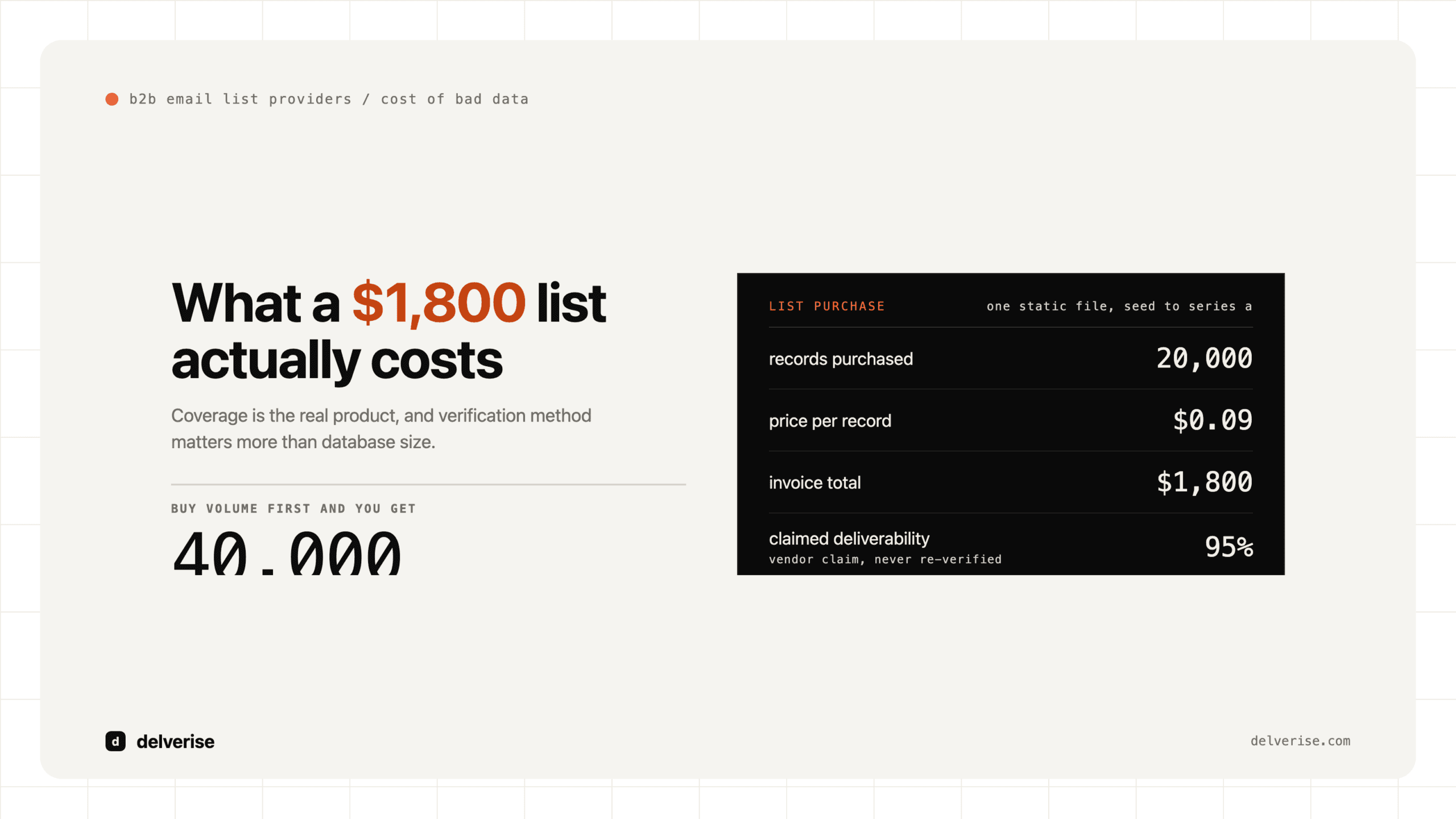
- Buy data against a defined account list and a defined trigger. Buying volume first is how teams end up with 40,000 records and no pipeline.
What is a B2B email list provider?
The category covers three fairly different businesses that get sold under one name.
List brokers sell you a static file. You pay per record, you get a CSV, and the data ages from the moment it lands. Database platforms such as Apollo, ZoomInfo, Cognism, and Lusha sell subscription access to a maintained contact graph with search filters, exports, and usually an API. Enrichment layers such as Clay sit above the providers: you bring the accounts or the domains, and the tool routes each lookup through multiple data sources until it finds a verified match.
The distinction matters because it changes what you are actually paying for. With a broker you pay for records. With a platform you pay for access and filters. With an enrichment layer you pay for successful matches, which aligns cost with outcome more directly than a seat-based contract does.
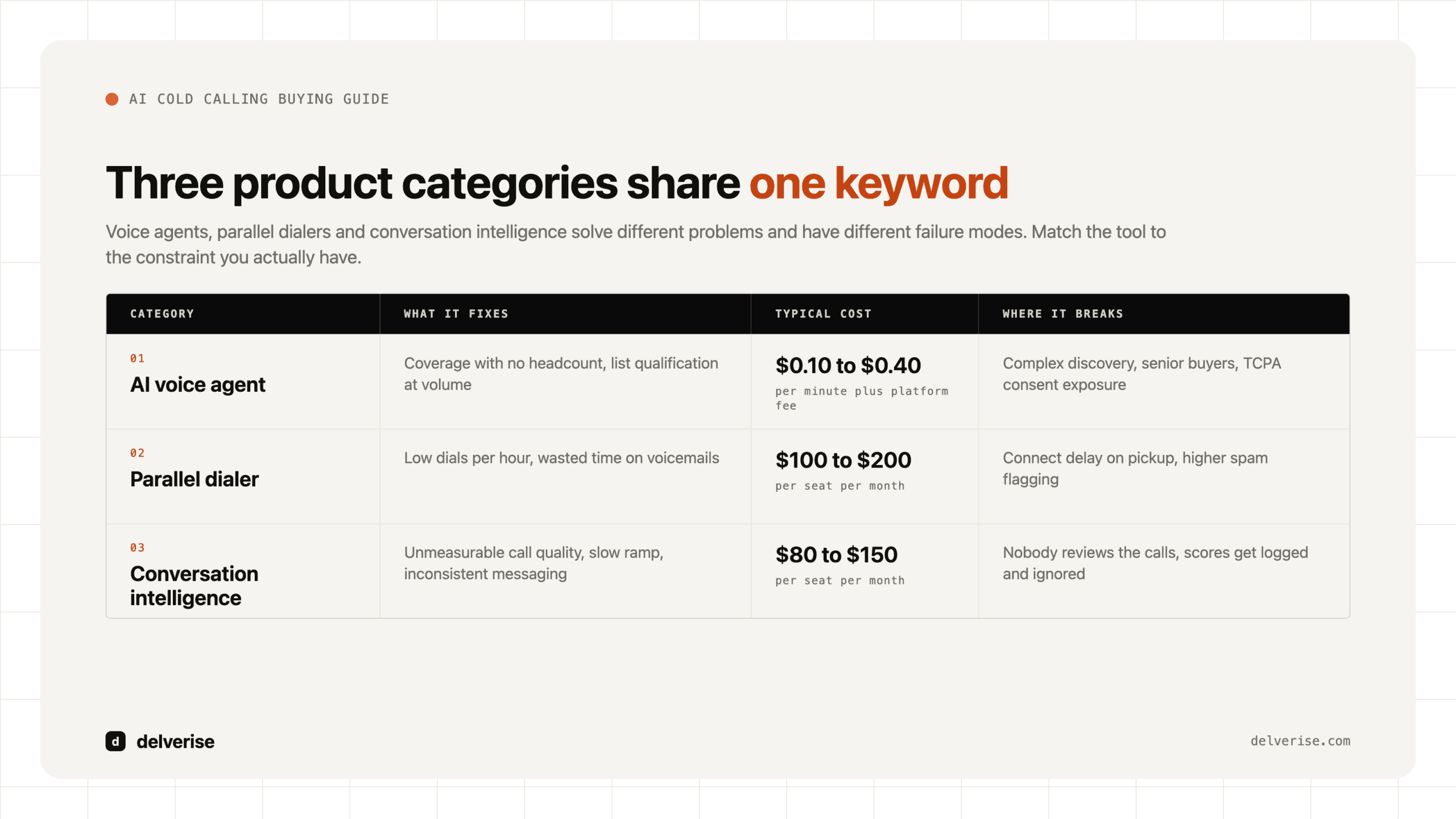
How do the provider types compare?
| Type | What you’re buying | Best fit | Main tradeoff |
|---|---|---|---|
| Static list broker | A one-time file of records | One-off event or geo campaigns | No refresh, no provenance, highest bounce risk |
| Database platform | Subscription access plus search and export | Teams with a stable ICP and steady volume | Annual commitments, credit caps, uneven non-US coverage |
| Waterfall enrichment | Verified matches on accounts you already chose | Teams running account-based or signal-triggered outbound | Requires someone to own the workflow and the logic |
| Signal and intent layers | Timing on top of contact data | Teams with an existing motion that needs prioritization | Weak on its own, valuable layered on clean data |
| Research-led sourcing | Manually verified contacts at low volume | Enterprise or founder-led outbound to under 200 accounts | Does not scale, expensive per contact |
If you are already assembling this stack, the layer map in our guide to what GTM tech actually moves pipeline shows where data sits relative to sequencing, CRM, and reporting.
What does bad data actually cost?
Here is a scenario we see repeatedly at Seed and Series A.

A team buys 20,000 contacts at roughly $0.09 per record: $1,800. The vendor claims 95% deliverability. Nobody re-verifies, because verification feels like paying twice for the same thing. The team loads the file into five warmed sending domains and starts sequencing.
The true valid rate turns out to be 82%. That means about 3,600 bad addresses inside a 20,000-send campaign, and an 18% hard bounce rate in the first week. Mailbox providers start throttling well below that number. Within days, all five domains are landing in spam, including for the 16,400 contacts whose addresses were fine.
Recovery takes three to four weeks of re-warming, plus new domains if the old ones are burned outright. The team loses most of a quarter of outbound output. Pre-verifying that same file through a service like MillionVerifier or NeverBounce costs roughly $0.004 per email, about $80. The $80 check would have caught the problem before it touched a sending domain.
The lesson generalizes: the price of the list is almost never the real cost. The real cost is the deliverability, rep time, and pipeline timing you spend on records that were never going to convert.
Why does provider coverage vary so much on the same ICP?
Providers build their contact graphs differently. Some rely heavily on contributory networks (users install an extension and share their address book in exchange for credits). Some scrape and pattern-match public sources. Some license from data cooperatives. Some run real-time verification at the moment of query, and some serve a cached record verified months ago.

That is why coverage is uneven in predictable ways. Contributory networks skew toward US tech companies with heavy sales-tool adoption. Pattern-matching performs well on companies with a consistent email format and poorly on firms that use aliases. European coverage is generally thinner and legally more constrained, since GDPR requires a lawful basis such as legitimate interest, with documented sourcing and a working opt-out.
The practical response: run a match-rate test before you sign anything. Take 200 real accounts from your ICP, ask each vendor to return contacts for the same 200, and compare match rate and verified rate side by side. Vendors will resist. Good ones will agree. G2 review pages are useful for spotting which providers repeatedly draw complaints about credit expiration or export limits, though read recent reviews only, since data quality shifts with every refresh cycle.
What should you check before you sign?
- Match rate on 200 of your real target accounts, tested against every finalist
- Verification method and date stamp on each returned email
- Behavior on catch-all domains (servers that accept all mail, so validity cannot be confirmed)
- Refresh cadence and whether stale records are re-checked or just re-served
- Regional coverage split for your actual target geographies, not the global total
- Credit rollover, export caps, and whether exported records stay yours after churn
- GDPR lawful basis, source documentation, and suppression handling
- API access on your plan tier, not just a promised upgrade path
- Contract length and what happens to your enriched CRM records at renewal
How do strong teams combine providers?
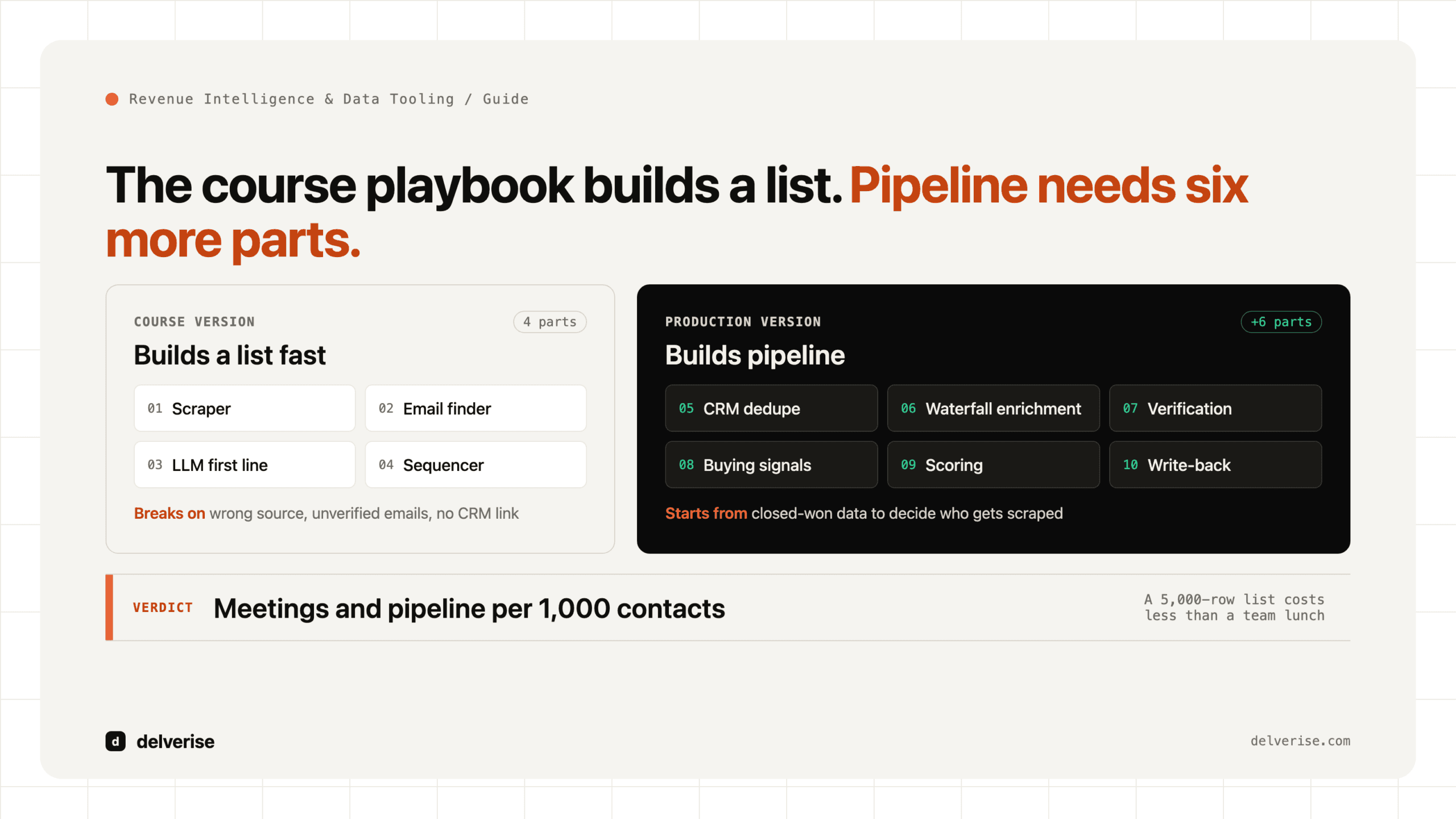
The pattern that works: define the account list first, then find contacts, then verify, then sequence. Reversing that order is what produces expensive, unfocused campaigns.

Start from a scored account list built on fit and observable triggers. Our guide to building a prospecting list that converts covers the scoring logic. Then run those accounts through a waterfall so each lookup hits provider A, falls through to provider B on a miss, and stops as soon as a verified match returns. Clay is the most common tool for this, and it is worth evaluating if you are running more than a few hundred lookups a month, because you pay per successful match rather than per seat. Teams that want the waterfall, verification, and CRM sync built as one system rather than assembled ad hoc can see how delverise approaches it on the Clay implementation page.
Then verify independently of the provider that supplied the record. Then push clean contacts into the CRM with source and confidence fields intact, so you can measure which provider actually produced pipeline. That last step is where most stacks fall apart, and it is the core of any working CRM enrichment setup.
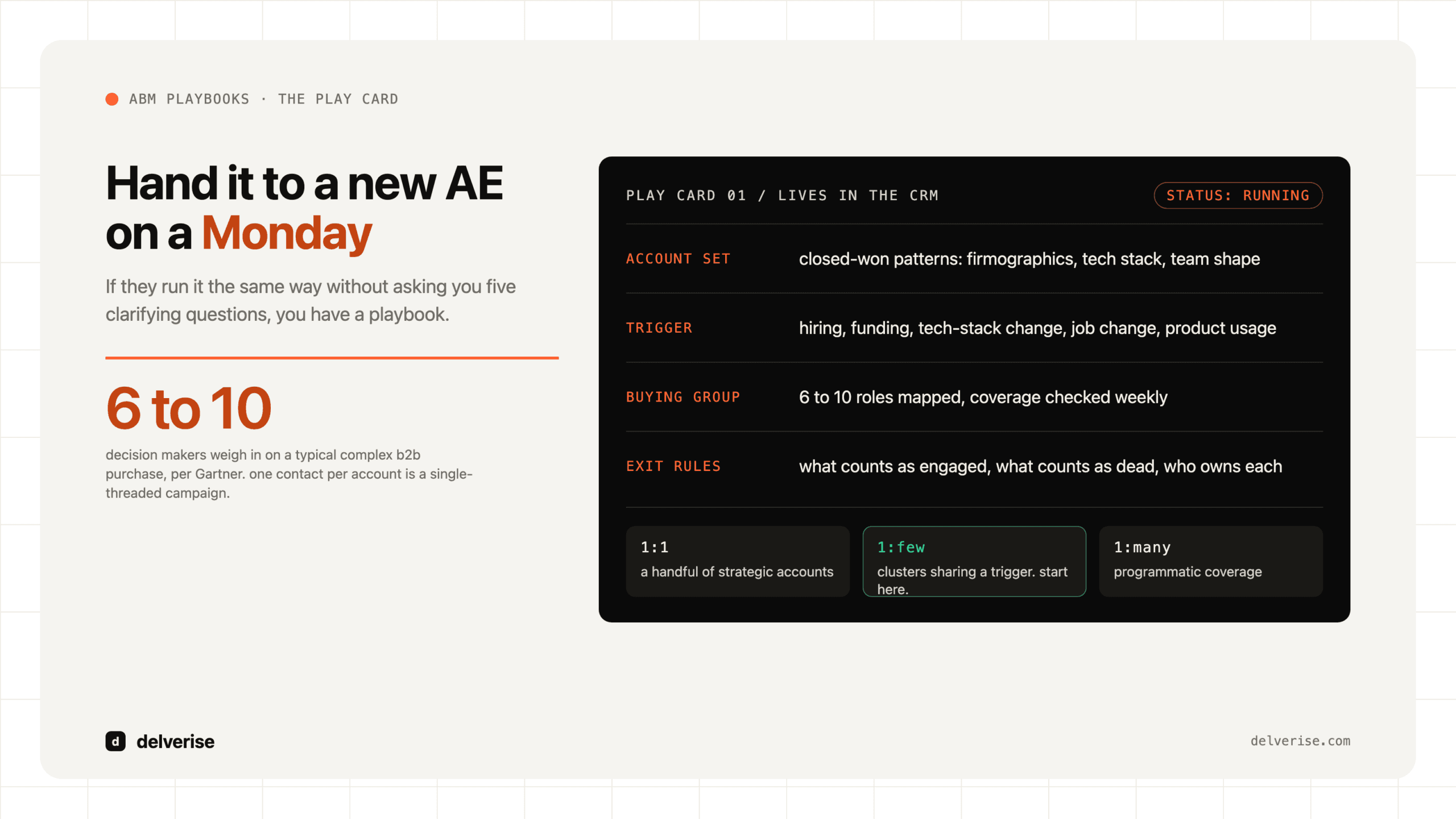
Timing sits on top of all of this. Gartner’s research on B2B buying found that buyers spend only about 17% of their total purchase journey meeting with potential suppliers, split across every vendor they consider. McKinsey’s B2B Pulse work found buyers now move across roughly ten channels during a single decision. A perfect contact list still reaches most people outside their buying window, which is the constraint we cover in why batch outreach cannot see buying timing.
What does good look like 90 days in?
Track four numbers per provider: match rate against your ICP, verified rate after independent validation, bounce rate in live sending, and cost per verified contact that produced a reply. Most teams track only the first and the price. The fourth number is the one that ends vendor arguments, because it exposes providers that look cheap per record and expensive per conversation.
A healthy setup lands under 2% bounce, above 60% match rate on your core ICP, and a per-provider cost that you can defend in a board meeting. If you are still comparing options at the database level, our breakdown of what B2B revenue teams should actually buy covers the company-data side of the same question.
Frequently Asked Questions
Are purchased B2B email lists legal?
In the US, CAN-SPAM permits cold commercial email as long as you identify yourself, include a physical address, and honor opt-outs. In the EU and UK, GDPR requires a lawful basis, most commonly legitimate interest, plus documented sourcing and a working opt-out. Static broker files often fail the documentation test, which is one reason platforms with traceable provenance are safer for European outbound.
How fast does B2B contact data go stale?
Faster than most buyers assume. Job changes, restructures, and domain migrations all break records, and the effect compounds in a downturn or after acquisition activity. Treat any list older than a quarter as unverified, and re-check before every send rather than relying on the vendor’s original stamp.
Should we buy one big platform or run a waterfall?
Under a few hundred lookups a month, a single platform subscription is simpler and cheaper to operate. Above that, or when your ICP spans multiple regions, a waterfall almost always wins on coverage and cost per verified contact. The tradeoff is that someone has to own the workflow.
What match rate should we expect?
For US-based tech ICPs, 60% to 80% on work emails is a reasonable expectation from a good provider. For European mid-market, expect meaningfully less from any single source. Direct dial coverage is lower across the board, often under 40%. Any vendor promising 95% on a mixed-geography list is quoting database totals rather than your list.
Do we still need a list provider if we use AI prospecting tools?
Yes. AI tools improve targeting, research, and message relevance, and they still depend on an underlying contact source to reach anyone. Our guide to AI prospecting tools covers where the two layers meet and which claims to discount.
Read next