←Back to blog
Revenue Intelligence & Data ToolingGuideAugust 19, 20268 min read
B2B Prospecting: How Revenue Teams Build Pipeline That Compounds
B2B prospecting is the systematic work of identifying accounts that match your ideal customer profile, finding the right people inside them, and opening relevant conversations before a formal buying process starts. Done well, it runs as a repeatable system built on account data, buying signals, and disciplined follow-up, so pipeline stops depending on individual rep heroics.
B2B prospecting is the systematic work of identifying accounts that match your ideal customer profile, finding the right people inside them, and opening relevant conversations before a formal buying process starts. Done well, it runs as a repeatable system built on account data, buying signals, and disciplined follow-up, so pipeline stops depending on individual rep heroics.
Key takeaways
- Prospecting is a system with four layers: market definition, data, signals, and execution. Weakness in any one layer caps the other three.
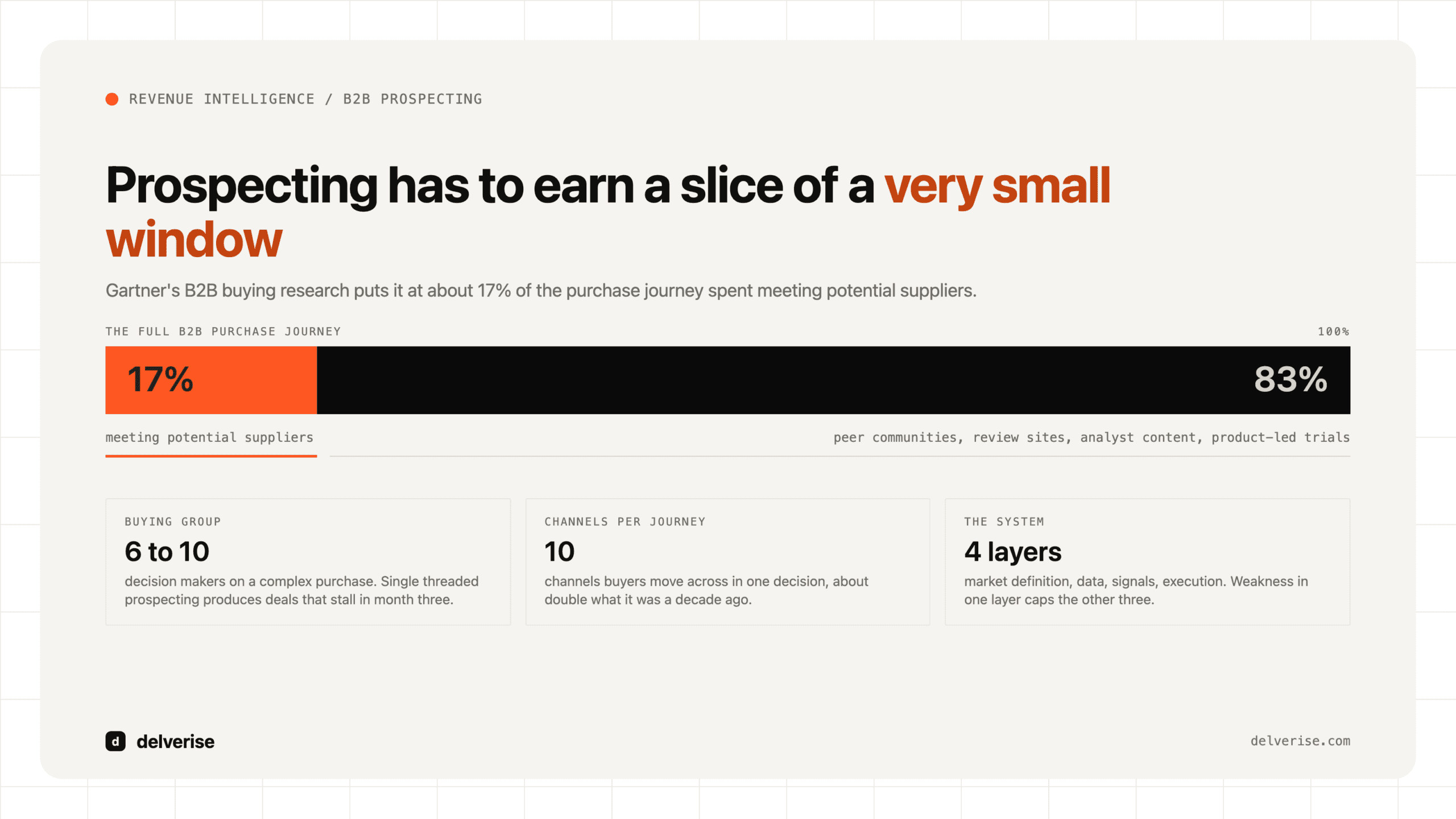
- Gartner’s research on B2B buying found that customers spend only about 17% of their purchase journey meeting with potential suppliers. Your prospecting has to earn a slice of a very small window.
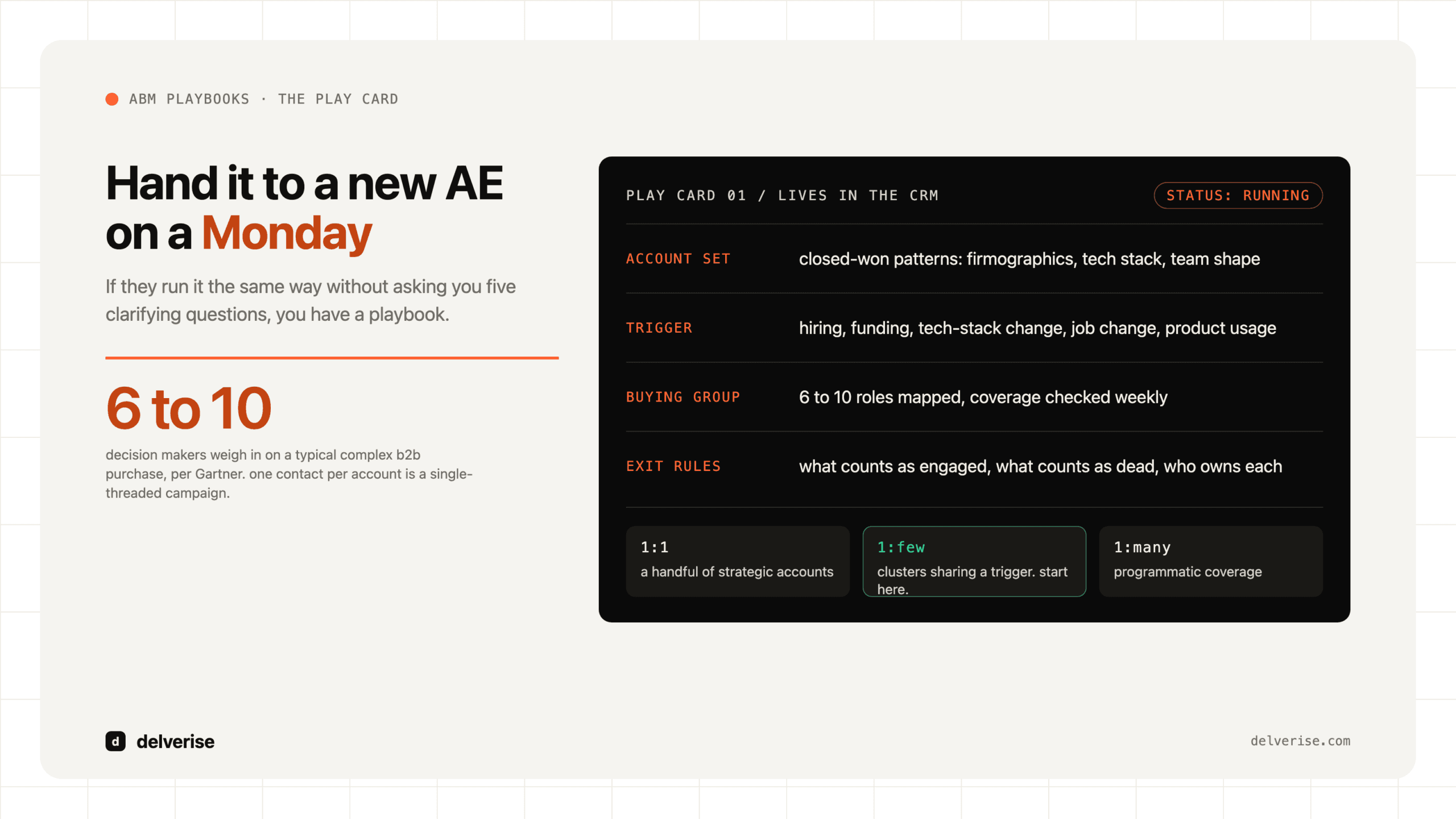
- Buying groups for complex B2B purchases typically run six to ten people. Single-threaded prospecting produces single-threaded deals that stall.
- Volume-first outbound decays fast. Relevance per contact, driven by real signals, is what holds reply rates as you scale.
- Most teams over-buy tools and under-build the workflow that connects them. The connective tissue is where the compounding happens.
- Measure prospecting on qualified pipeline per rep per quarter and account coverage, with activity metrics as diagnostics only.
What is B2B prospecting, and how does it differ from lead generation?
Lead generation captures demand that already exists: someone fills out a form, downloads a report, or requests a demo. Prospecting creates the first touch on accounts that have never raised a hand. The two feed the same pipeline, and they require different machinery.
Two terms matter throughout. Your ideal customer profile (ICP) is the firmographic and behavioral definition of accounts where you win, retain, and expand, which is a narrower set than accounts that will buy once. A buying signal is any observable event that raises the probability an account is entering a buying window: a new VP of Sales hire, a funding round, a job posting for a role your product supports, a competitor’s tool appearing in their stack, a spike in third-party research activity.
The practical difference for a revenue leader is control. Inbound volume moves when your brand and content move, which takes quarters. Prospecting output moves when you change targeting, data, or messaging, which takes weeks. That is why prospecting stays the primary pipeline lever for Seed to Series B companies even when content is working.
Why has high-volume B2B prospecting stopped working?
Three forces compounded at once.

First, buyer attention got scarcer. McKinsey’s B2B research found that buyers now move across roughly ten channels in a single decision journey, about double what it was a decade ago. Your email is competing with peer communities, review sites, analyst content, and the vendor’s own product-led trial.
Second, the buying group got bigger. Gartner puts the typical complex B2B buying group at six to ten decision makers, and research published in Harvard Business Review on consensus buying showed that purchase likelihood falls sharply as more stakeholders enter the process. A prospecting motion that reaches one champion and stops there is building deals that die in month three.
Third, tooling democratized volume. Sequencing platforms and AI writing made it trivial for everyone to send more. When supply of mediocre outreach goes up, the price of attention goes up with it. Deliverability infrastructure tightened in response, and generic sending now carries real domain risk.
The response that works is fewer, better-targeted touches per account, multi-threaded across the buying group, timed to something observable. That requires a system, which is where most teams are actually stuck.
What does a modern B2B prospecting system look like?
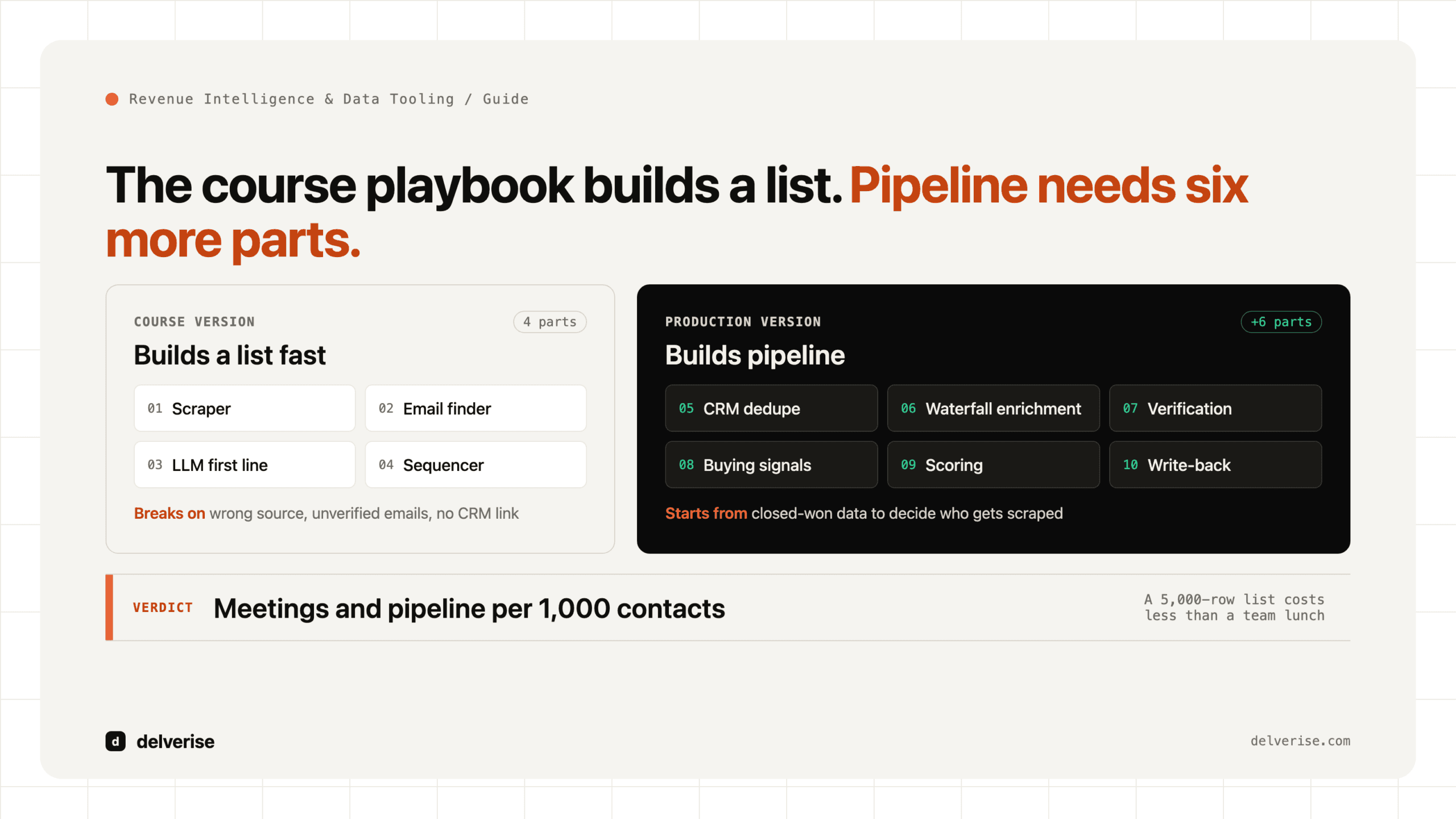
Four layers, in order. Skipping ahead is the most common failure.

Layer 1: market definition. Convert your ICP into a finite, named list of accounts with a total addressable market you can count. If you cannot state how many accounts exist in your serviceable market, you cannot judge coverage or forecast prospecting capacity. Building this account universe once, then maintaining it, is the highest-return work in the stack. We wrote about the mechanics of turning scattered records into a countable market in our guide to building a leads map.
Layer 2: data. Contact and company data decays continuously as people change jobs. No single provider covers every geography, seniority, or company size well. Serious teams chain providers so a miss at one falls through to the next, which is the data enrichment waterfall approach. The goal is coverage and accuracy on the accounts that matter, not the largest possible database.
Layer 3: signals. Signals decide sequencing. Instead of working the account list alphabetically, you work it by probability of a buying window being open. Hiring data, funding events, technology installs, leadership changes, product usage, and third-party intent all qualify. Each signal needs a defined trigger, a defined message angle, and a defined owner.
Layer 4: execution. Email, phone, LinkedIn, and paid retargeting, orchestrated so the buying group sees a coherent story. This layer gets the most attention and the most tooling budget, and it delivers the least improvement when layers one through three are weak.
Ownership matters as much as design. Someone has to own the plumbing between these layers, refresh the data, and retire signals that stop predicting. That responsibility sits inside GTM operations, and leaving it unassigned is why prospecting systems quietly rot after two quarters.
Should you buy prospecting tools or build the workflow?
Almost every team does both. The useful question is which layer deserves which treatment.

| Layer | Buy | Build | Why |
|---|---|---|---|
| Market definition | Firmographic data source | Your ICP scoring logic and account tiering | Scoring encodes your win patterns, which no vendor knows |
| Contact data | Two or three providers | The waterfall routing and verification rules | Coverage varies by segment; routing is where accuracy is won |
| Signals | Intent and event feeds | Trigger definitions, thresholds, and routing | A raw feed without a threshold is noise your reps will ignore |
| Execution | Sequencer, dialer, CRM | Message logic tied to each signal | Templates are commodities; the signal-to-message mapping is yours |
| Measurement | BI or CRM reporting | Attribution model for prospecting-sourced pipeline | Off-the-shelf reports rarely separate created from influenced |
For the orchestration layer that connects data, signals, and sequencing, Clay has become the default for teams that want waterfall enrichment, signal scoring, and list building in one place without engineering time. The honest tradeoff: Clay has a real learning curve, credit consumption grows quickly with sloppy table design, and a team with a 300-account market and a stable data provider may not need it at all. It earns its cost when you are running multiple signals across thousands of accounts and want the logic in one auditable place. If you want the system built and handed over working, that is what our Clay implementation practice does.
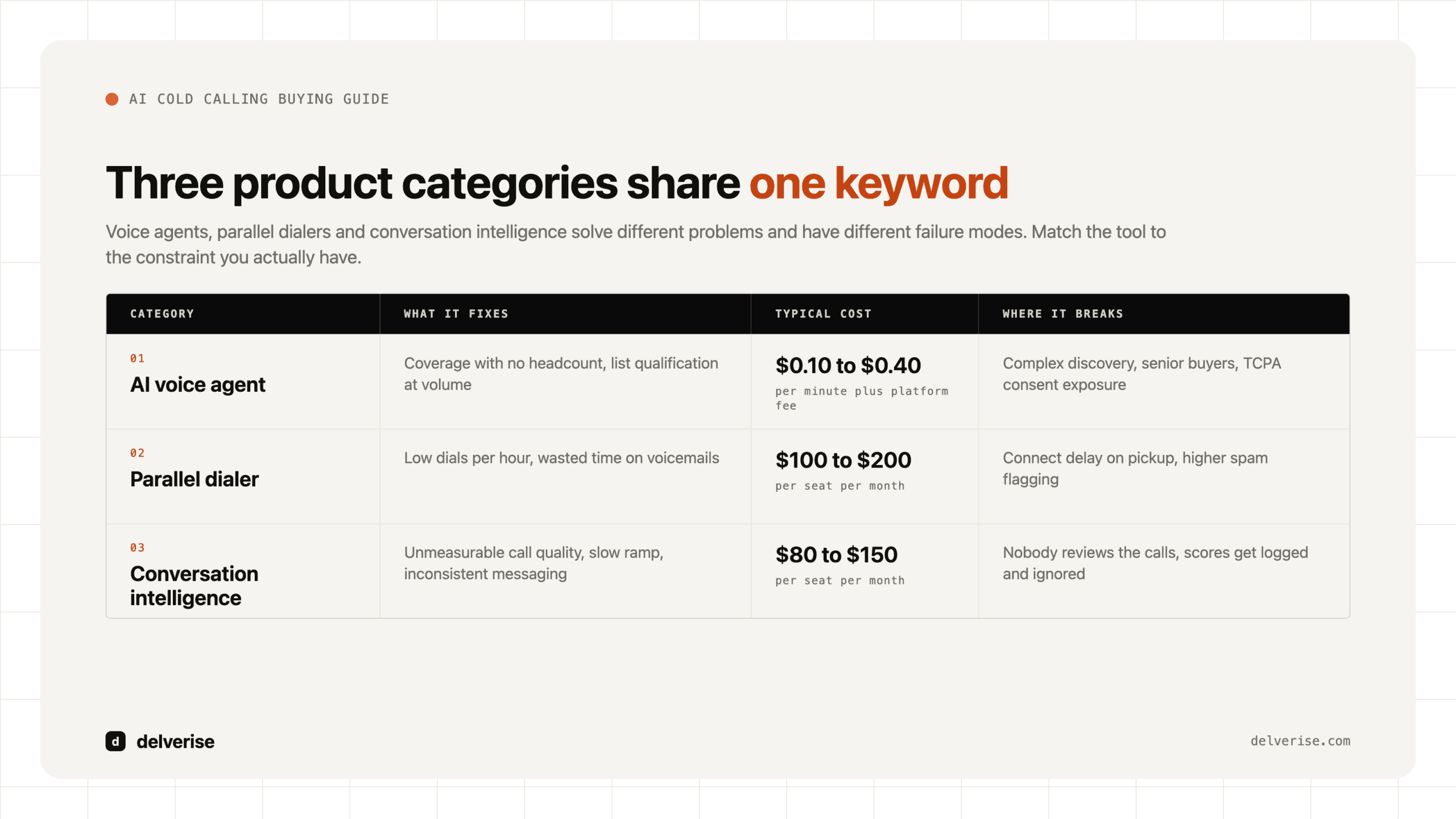
On the software side generally, evaluate against the workflow you already defined. A tool that does not slot into a named layer is a tool you will churn. Our AI prospecting tools buying guide covers the current category in more detail, and where AI BDRs break is worth reading before you replace headcount with autonomous agents.
What does this look like with real numbers?
Here is an illustrative model for a Series A company with four AEs, a $30,000 average contract value, and a quarterly pipeline target of $3.6 million.
- Serviceable market: 6,200 companies match the firmographic filter.
- Tight ICP after scoring on win patterns: 940 accounts. This is the working universe.
- Accounts showing at least one qualifying signal in a given quarter: roughly 15%, so 140 accounts.
- Buying group coverage at four contacts per account: 560 contacts to reach.
- At a 6% positive reply rate on signal-timed, multi-threaded outreach, that is about 34 conversations.
- At a 45% conversion from conversation to qualified opportunity: 15 opportunities, or roughly $450,000 in prospecting-sourced pipeline.
That math immediately tells you something useful: this motion covers about 12% of the target on its own. The conclusion is not to send more email. It is to widen the signal set so more of the 940 accounts become workable each quarter, improve reply rate through better signal-to-message mapping, and pair prospecting with the other pipeline sources. Running the numbers before you scale spend is what separates a prospecting system from a prospecting habit.
How should you measure B2B prospecting?
Use two primary metrics and treat everything else as a diagnostic.
Qualified pipeline per rep per quarter is the outcome metric. It survives changes in channel mix, tooling, and headcount.
ICP account coverage is the leading metric: what percentage of your working account universe received a multi-threaded, signal-relevant touch in the last 90 days. Low coverage with good conversion means you are under-scaled. High coverage with poor conversion means your targeting or messaging is wrong, and adding capacity will make it worse.
Activity counts, open rates, and connect rates are diagnostics. They explain why a number moved, and they mislead badly when used as goals.
A short readiness check before you invest in scaling:
- You can state your serviceable account count and defend the filters behind it
- Contact data accuracy on your top tier is verified, not assumed
- At least three signals are defined with thresholds and owners
- Every signal maps to a specific message angle
- Prospecting-sourced pipeline is reported separately from inbound
- One named person owns the plumbing between data, signals, and sequencing
Teams that treat prospecting as an engineering problem rather than a staffing problem tend to hold performance as they grow. That is the core of how we approach GTM engineering: design the system, instrument it, then add people to a motion that already works.
Frequently Asked Questions
How many accounts should one SDR or AE work at a time?
For a multi-threaded motion with four to six contacts per account, 40 to 60 active accounts per rep per quarter is a realistic ceiling. Higher counts almost always mean shallower research, single-threading, and falling reply rates. Fix targeting before raising the account load.
Is cold email still worth running in 2026?
Yes, with tighter constraints. Sending infrastructure needs proper authentication and warmed domains, volume per mailbox has to stay conservative, and relevance per message has to be high enough to earn a reply. Cold email works as one channel inside a coordinated motion. Used alone at high volume, it burns domains and market goodwill.
What is the difference between intent data and buying signals?
Intent data is one type of signal, usually third-party content consumption indicating research activity. Buying signals include intent plus first-party and public events like hiring, funding, leadership changes, and technology adoption. Public events are often more reliable because they are verifiable and timestamped.
How long before a new prospecting system produces pipeline?
Expect first conversations within three to four weeks and a readable conversion picture by week ten to twelve, assuming your sales cycle is 60 to 90 days. Judging performance before you have 30 or more conversations in the data is guesswork.
Should we hire SDRs or build the system first?
Build the targeting, data, and signal layers first, then hire into them. SDRs hired into an undefined system spend their first two quarters doing manual list building and produce weak numbers, which reads as a hiring failure when the real gap was operational. Founders should validate the motion themselves before handing it over.
Read next